Feather Dusters For Sale
Feather Duster Worm In Saltwater Aquariums: FAQ
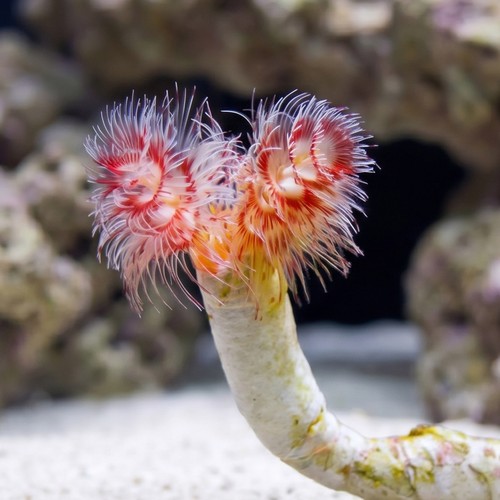
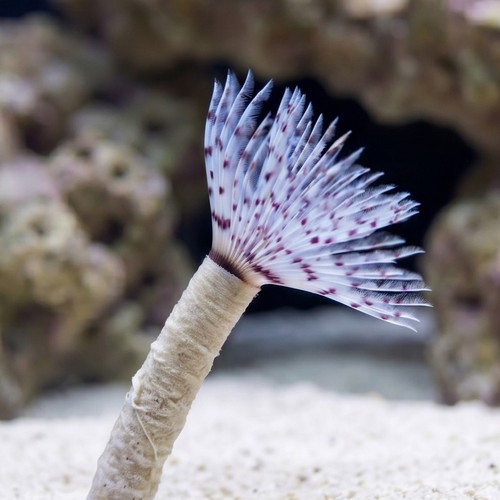
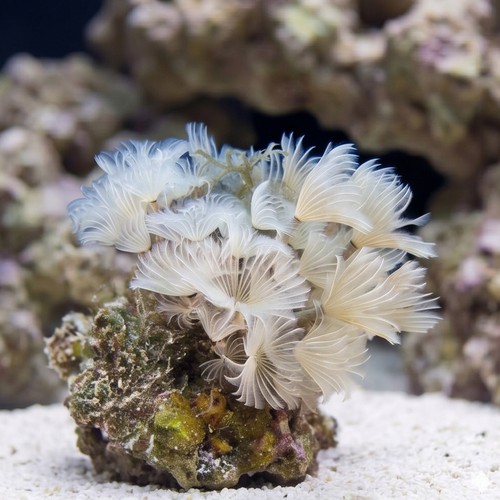
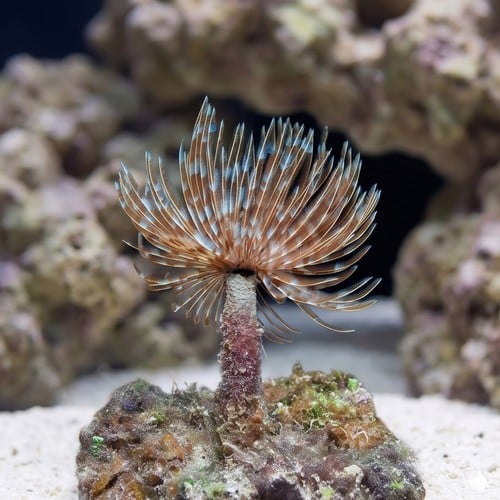
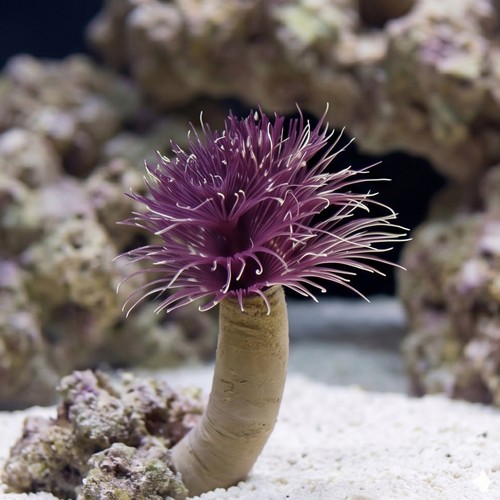
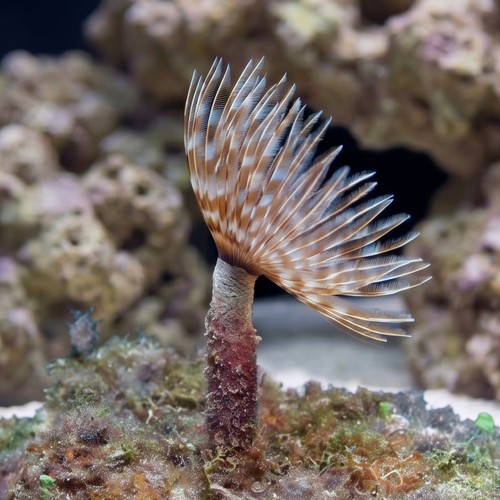
Feather duster worms are beautiful, tube-dwelling marine invertebrates prized for the elegant, fan-shaped crowns they display in reef aquariums. These worms belong to the family Sabellidae and are known for their delicate, feather-like radioles; structures used for both feeding and respiration. Despite their intricate appearance, feather dusters are hardy, peaceful, and excellent additions to saltwater tanks, especially for hobbyists looking to add natural movement and diversity.
Feather dusters build protective tubes made of mucus, sand, and small shell fragments. They anchor themselves inside these tubes and extend their feathery crowns to filter microscopic food particles from the water. When startled, they quickly retract into their tubes for protection, a natural behavior that makes them fascinating to observe.
Why feather dusters are popular in reef tanks:
Peaceful and reef-safe: They do not harm corals, fish, or invertebrates.
Natural filter feeders: Improve water clarity by removing suspended particles.
Beautiful display: Their crowns come in vibrant colors such as orange, purple, yellow, and white.
Low maintenance: Thrive in stable reef conditions with gentle water flow.
One Saltwaterfish.com reviewer of the Pink Dwarf Feather Duster shared: “Nice livestock.”
Pro care tips:
Provide moderate flow so the worm can filter food without being blasted.
Target-feed phytoplankton or fine particulate foods once or twice weekly.
Avoid handling or disturbing the tube; feather dusters can drop their crowns if stressed.
Maintain stable alkalinity and calcium levels to support tube building.
Bottom line:
Feather duster worms are peaceful, hardy filter feeders that bring beauty and natural motion to saltwater aquariums. Their vibrant crowns and gentle behavior make them ideal additions to mixed reef tanks. Explore Saltwaterfish.com’s selection of feather dusters, all backed by our 8-Day Live Guarantee for healthy, thriving arrivals.
Feather duster worms are completely reef safe and are considered excellent additions to saltwater aquariums of all sizes. These gentle filter feeders belong to the family Sabellidae and pose no threat to corals, fish, or other invertebrates. Instead, they contribute positively to the ecosystem by filtering microscopic particles from the water, helping to improve overall water clarity and nutrient balance.
Feather dusters live inside protective tubes made from sand, mud, or secreted materials. They extend their colorful, crown-like radioles to capture plankton from the water column, then retract instantly when disturbed. Because they do not sting, overgrow, or compete aggressively, they integrate seamlessly into reef systems.
Reasons feather duster worms are reef safe:
Non-aggressive: They cannot harm corals, fish, or tank inhabitants.
Filter feeders: Improve water quality by removing suspended particles, uneaten food, and plankton.
Stationary and peaceful: They remain anchored in their tubes and do not disturb surrounding corals or rockwork.
Compatible with most livestock: Safe with all reef fish except a few natural predators like wrasses or butterflyfish.
One Saltwaterfish.com reviewer of the Atlantic Duster Cluster shared: “Very good quality and healthy specimens\!”
Pro reef-keeping tips:
Keep feather dusters in moderate flow so they can feed without being blown around.
Supplement with phytoplankton to support long-term health.
Avoid fish known to pick at worms: Coral Beauties, Copperband butterflies, and some wrasses may nip their crowns.
When moving rockwork, be careful not to damage their delicate tubes.
Bottom line:
Feather duster worms are entirely reef safe and excellent filter feeders that enhance both the beauty and function of a saltwater aquarium. Their gentle nature and stunning appearance make them ideal additions to mixed reef setups. Explore Saltwaterfish.com’s feather duster selection, each backed by our 8-Day Live Guarantee for a healthy and successful arrival.
Feather duster worms are filter-feeding invertebrates that thrive by capturing microscopic food particles from the water column. In a well-established reef tank, they can survive on naturally occurring plankton and dissolved organic matter, but regular supplemental feeding significantly improves their growth, coloration, and long-term health. Because feather dusters cannot move to search for food, providing the right type and size of foods is essential.
What to feed feather duster worms:
Phytoplankton: Their primary and most important food source. Live or refrigerated phytoplankton works best.
Marine snow: Contains suspended organic particles similar to natural reef plankton.
Microfauna suspensions: Products containing bacteria, protozoa, and other microscopic organisms.
Finely powdered coral foods: Such as reef roids or micro-particulate blends (in small amounts).
How to feed them effectively:
Turn off pumps and powerheads for 10–15 minutes so the food remains suspended.
Target-feed near the worm’s crown using a turkey baster or pipette. Do not blast the food directly onto the worm.
Feed 2–3 times per week for best results, especially in newer tanks with lower natural plankton levels.
Maintain stable water parameters; feather dusters rely on consistent salinity and flow to feed efficiently.
One Saltwaterfish.com reviewer of the Assorted Atlantic Feather Duster shared: “It is awesome it was very large much bigger than I expected.”
Pro feeding tips:
Avoid overfeeding: excess food can degrade water quality.
Place feather dusters in areas with moderate, indirect flow to help deliver food naturally.
Feed after lights out periodically: many filter feeders extend their crowns more fully at night.
Keep calcium and alkalinity stable to support tube building and overall health.
Bottom line:
Feather duster worms thrive on a diet of phytoplankton and fine particulate foods delivered gently and consistently. Regular feeding helps them maintain vibrant crowns, strong tubes, and long-term stability in your reef tank. Explore Saltwaterfish.com’s feather duster selection, each backed by our 8-Day Live Guarantee for healthy, thriving arrivals.
Feather duster worms are gentle, tube-dwelling filter feeders that rely on capturing microscopic food particles from the water column. In captivity, they eat many of the same foods they would consume in the wild, mainly phytoplankton and suspended organic matter. Because they cannot move to seek out food, providing consistent, fine-particle nutrition is essential for their long-term health and crown development.
Primary foods feather duster worms eat:
Phytoplankton: Their most important food source. Live or refrigerated phytoplankton provides the correct particle size for efficient feeding.
Marine snow: Contains a natural mix of organic particles similar to what they filter from wild reef environments.
Microfauna suspensions: Blends of bacteria, protozoa, and microplankton that mimic natural reef plankton.
Fine powdered coral foods: Products such as reef roids or micro-particulate blends (used sparingly).
One Saltwaterfish.com reviewer of the Pink Dwarf Feather Duster shared: “Arrived in great shape and had his "feathers" out minutes after being put in his new home.”
Pro tips for feeding feather dusters:
Target-feed gently using a turkey baster or pipette. Avoid blasting food directly onto the worm.
Turn off pumps for 10–15 minutes so the food stays suspended near their crowns.
Feed 2–3 times per week, especially in newer tanks with fewer natural plankton sources.
Maintain moderate, indirect flow to help deliver food naturally.
Bottom line:
Feather duster worms eat phytoplankton, marine snow, and fine suspended particles in captivity. Regular, gentle feeding supports vibrant crown display, strong tube building, and long-term health. Explore Saltwaterfish.com’s feather duster selection, each backed by our 8-Day Live Guarantee for a successful, thriving addition to your reef tank.
Feather duster worms are peaceful, stationary filter feeders, so choosing the right tank mates is essential for their long-term health. Fortunately, feather dusters are compatible with a wide range of reef-safe fish and invertebrates, making them excellent additions to mixed reef systems. The key is avoiding species that naturally prey on tube worms or pick at their delicate crowns.
Safe tank mates for feather duster worms:
Clownfish (Ocellaris, Percula, and designer varieties): Peaceful and uninterested in feather dusters.
Gobies and blennies: Calm, bottom-dwelling fish that pose no threat.
Chromis and anthias: Active schooling fish that ignore invertebrates.
Cardinalfish: Gentle mid-water swimmers ideal for peaceful reefs.
Reef-safe wrasses (Six Line excluded): Fairy and flasher wrasses coexist well.
Cleaner shrimp, hermits, and snails: All are safe and help maintain tank cleanliness.
Corals and anemones: Feather dusters do not sting or compete with corals.
Tank mates to avoid:
Butterflyfish: Many species feed on tube worms in the wild.
Certain angelfish: Larger angels may nip at their crowns.
Predatory wrasses: Six Line, Melanurus, Leopard, and other worm-eating wrasses may attack feather dusters.
Pufferfish: Known to pick at soft invertebrates.
Crabs: Some large crabs may disturb or damage their tubes.
One Saltwaterfish.com reviewer of the Atlantic Duster Cluster shared: “I got 2 decent sized clusters\! Super happy.”
Pro tips for selecting tank mates:
Choose peaceful, reef-safe fish to avoid nipping.
Avoid housing with known worm predators.
Provide moderate flow and stable rock placement to protect their tubes.
Supplement with phytoplankton to keep them well-fed and healthy.
Bottom line:
Feather duster worms thrive with peaceful, reef-safe tank mates such as clownfish, gobies, cardinals, and cleaner shrimp. Avoid predatory fish or species that naturally consume tube worms. With the right companions, feather dusters become beautiful, worry-free additions to any reef aquarium. Explore Saltwaterfish.com’s feather duster selection, each backed by our 8-Day Live Guarantee for healthy, thriving arrivals.
Feather duster worms are considered easy to moderately easy to keep, making them great additions to most saltwater aquariums even for beginners. These peaceful filter feeders from the family Sabellidae thrive when provided with stable water conditions, moderate flow, and access to fine, planktonic foods. Their beautiful feather-like crowns and gentle behavior make them both interesting and low-maintenance invertebrates.
Feather dusters live inside protective tubes and extend their crowns to filter microscopic particles from the water. They do not require intense lighting, do not sting tankmates, and generally adjust well to life in captivity when their basic needs are met.
Why feather dusters are not hard to keep:
Low light requirements: They do not rely on photosynthesis and thrive in low to moderate lighting.
Peaceful and non-aggressive: They coexist well with most reef-safe fish and invertebrates.
Simple feeding: Phytoplankton, marine snow, and fine particulate foods support long-term health.
Hardy when stable: If water parameters remain consistent, they can live for years.
What makes them moderately challenging:
Sensitivity to salinity and chemistry swings: Sudden changes can cause stress or crown retraction.
Possible predation: Certain fish like butterflyfish, angelfish, and some wrasses may nip at them.
Feeding reliance: Tanks with ultra-low nutrients may require more frequent supplemental feeding.
Crown shedding: Feather dusters may drop their crowns when stressed, an alarming but sometimes reversible behavior.
One Saltwaterfish.com reviewer of the Feather Duster shared: “Beautiful color and nice size opened up almost immediately after placing in tank.”
Pro care tips:
Feed phytoplankton 2–3 times weekly in newer or ultra-clean tanks.
Keep water stable; avoid rapid salinity or temperature changes.
Place in moderate flow so food naturally passes over their crowns.
Avoid known predators like wrasses and butterflyfish.
Bottom line:
Feather duster worms are not hard to keep when given stable water conditions, occasional feeding, and protection from predators. They are peaceful, hardy, and add beautiful motion to any reef tank. Explore Saltwaterfish.com’s feather duster selection, each backed by our 8-Day Live Guarantee for healthy, thriving arrivals.
Feather duster worms vary in size depending on the species, but most commonly kept aquarium varieties reach 3–8 inches in crown diameter and 4–6 inches in tube length when fully grown. Their size makes them large enough to be visually striking in a reef tank while still remaining peaceful and easy to place among rockwork. Some larger species (such as Hawaiian or Giant Feather Dusters) can exceed these averages, with crowns reaching up to 10 inches across in mature systems.
Feather duster worms grow by adding material to their protective tubes and expanding their feather-like crowns, called radioles. These radioles are used for both feeding and respiration, so crown size is often an indicator of health. Under stable conditions with regular feeding, feather dusters grow steadily and maintain full crown expansion.
Typical sizes of common aquarium feather dusters:
Regular Sabellid Feather Dusters: 3–5-inch crowns, 3–4-inch tubes
*Hawaiian Feather Dusters (Sabellastarte spp.): 5–7-inch crowns, 4–6-inch tubes
Giant Feather Dusters: 7–10-inch crowns, long tubes extending deep into rockwork
One Saltwaterfish.com reviewer of the Assorted Atlantic Feather Duster shared: “Beautiful and hardy.”
Pro tips for supporting healthy growth:
Feed phytoplankton or marine snow 2–3 times per week in low-nutrient tanks.
Provide moderate, indirect flow to support feeding and respiration.
Avoid predators such as butterflyfish, some wrasses, and puffers.
Maintain stable salinity and temperature for consistent crown expansion.
Bottom line:
Most aquarium feather duster worms reach 3–8 inches in crown size, with some varieties growing even larger in well-fed, stable reef systems. Their graceful size and movement make them beautiful, peaceful additions to any tank. Explore Saltwaterfish.com’s feather duster collection, each backed by our 8-Day Live Guarantee for healthy, thriving arrivals.

Feather duster worms are excellent natural filter feeders, and while they don’t “clean the tank” in the same way as snails or hermit crabs, they do help improve water clarity and nutrient balance by removing microscopic particles from the water column. These peaceful invertebrates use their feather-like crowns (called radioles) to capture suspended plankton, bacteria, and organic debris, contributing to a healthier, more stable reef environment.
Their feeding behavior mimics the natural filtration processes found on coral reefs, where sabellid worms play a key role in regulating plankton levels and recycling nutrients. In aquariums, this makes them valuable members of a diverse clean-up crew, even though they don’t consume algae or detritus.
How feather dusters help “clean” a tank:
Filter suspended particles: They remove microplankton, uneaten food, and organic debris from the water.
Improve water clarity: Their constant filter-feeding helps polish the water visually.
Support nutrient balance: By consuming dissolved organics, they indirectly support overall nutrient stability.
Promote microfauna health: Their feeding encourages a natural plankton cycle that benefits other filter feeders.
One Saltwaterfish.com reviewer of the Pink Dwarf Feather Duster shared: “These are so adorable. They were a lot longer than I expected but healthy and pretty for sure.”
*What feather dusters don’t do:
They do not eat algae.
They do not consume detritus on rocks or sand.
They do not replace snails, crabs, or other clean-up crew members.
Pro tips for maximizing their filtration benefits:
Feed phytoplankton 2–3 times per week to support healthy crown extension.
Keep them in moderate, indirect flow so food naturally passes over their radioles.
Maintain stable water parameters to prevent crown retraction.
Avoid predators like wrasses, butterflyfish, and puffers.
Bottom line:
Feather duster worms do help “clean” the tank by filtering microscopic particles from the water, improving clarity and supporting a balanced ecosystem. While they don’t replace algae-eaters or detritivores, they are excellent, beautiful additions to any reef system. Explore Saltwaterfish.com’s feather duster collection, each backed by our 8-Day Live Guarantee for healthy, thriving arrivals.
Feather duster worms are hardy, peaceful filter feeders, but they rely on stable, reef-quality water parameters to stay healthy and keep their delicate crowns fully extended. Because they cannot move to escape poor conditions, maintaining consistent water chemistry is essential for long-term success. Sudden swings in salinity, temperature, or nutrient levels are the most common causes of stress and crown retraction in feather dusters.
Ideal water parameters for feather duster worms:
Temperature: 75–78°F
Salinity: 1.024–1.026 (very sensitive to swings)
pH: 8.1–8.4
Alkalinity: 8–9.5 dKH
Ammonia & Nitrite: 0 ppm (even low traces can cause stress)
Nitrate: \<10 ppm preferred, though they tolerate slightly higher levels
Phosphate: 0.03–0.1 ppm
Flow: Moderate, indirect water movement for optimal feeding
Feather dusters build and maintain their tubes using secreted mucus and available minerals, so stable alkalinity and calcium levels support tube strength. Scientific studies on sabellid worms show that their feeding and respiration efficiency declines sharply when exposed to rapid salinity or nutrient shifts, reinforcing the need for consistency.
One Saltwaterfish.com reviewer of the Feather Duster shared: “Nice specimen, was out and happy on arrival showing that there must have been limited stress during delivery.”
Pro tips for maintaining ideal conditions:
Top off evaporated water daily to keep salinity stable.
Perform regular water changes to maintain nutrient balance.
Feed phytoplankton 2–3 times weekly, especially in low-nutrient systems.
Keep them away from high-flow zones that can damage or irritate their crowns.
- Avoid predators such as wrasses, butterflyfish, and puffers.
Bottom line:
Feather duster worms thrive in stable, reef-safe water conditions with consistent salinity, gentle flow, and low nutrients. Keeping parameters steady is the key to ensuring vibrant crown extension and long-term health. Explore Saltwaterfish.com’s feather duster selection, each backed by our 8-Day Live Guarantee for a healthy, thriving arrival.
A feather duster worm losing its crown (the feathery radioles) can be alarming, but it’s a common and often reversible response to stress. The crown is essential for feeding and respiration, yet feather duster worms (Sabellidae) are capable of shedding it when conditions aren’t ideal. In many cases, they will regrow a new crown within a few weeks once the stressor is removed.
Most common reasons feather dusters drop their crowns:
Sudden changes in water parameters:
Rapid shifts in salinity, temperature, pH, or alkalinity are the most frequent causes. Even small swings can stress these sensitive filter feeders.
Nutrient or food shortages:
Feather dusters rely on phytoplankton and fine particulate foods. In ultra-clean or new tanks with low microfauna, they may shed their crown to conserve energy.
Physical irritation or predation:
Wrasses, butterflyfish, angelfish, crabs, and even curious hermits may nip at or disturb the crown.
Strong or direct flow:
Excessive flow can make feeding difficult and may trigger crown loss as a stress response.
Chemical stress:
Medication, carbon dust, or coral warfare compounds can cause irritation.
Normal regeneration cycle:
Older crowns occasionally shed naturally and regrow, especially in healthy, stable systems.
One Saltwaterfish.com reviewer of the Pink Dwarf Feather Duster shared: “Great filter feeders. Nice subtle pink. Perfect for nano reefs.”
Pro tips to help your feather duster recover:
Check salinity and temperature for recent swings.
Feed phytoplankton 2–3 times per week to support regeneration.
Reduce flow around the worm’s tube.
Add activated carbon to remove potential irritants.
Ensure no fish are picking at it. Wrasses and butterflies are common culprits.
Do NOT remove the worm; allow it time to regrow its crown.
Bottom line:
Feather duster worms lose their crowns when stressed by water parameter swings, insufficient food, strong flow, or irritation. The good news: most regenerate their crowns within weeks once conditions stabilize. For healthy, thriving feather dusters, explore Saltwaterfish.com’s collection, each backed by our 8-Day Live Guarantee for peace of mind.
Yes, feather duster worms can regrow their crowns, and in most cases, they do so successfully within a few weeks. The crown (called the radiole) is essential for feeding and respiration, but feather dusters have evolved the ability to shed it when stressed. While alarming to see, crown loss is often a temporary setback rather than a fatal condition.
Feather dusters shed their crowns for reasons ranging from sudden water parameter changes to food shortages or mild irritation from tank mates. Once conditions improve, they typically begin regenerating new radioles inside their protective tube. Many hobbyists observe full regrowth anywhere from 2–6 weeks, depending on the worm’s health and nutrition.
Why feather dusters can regrow their crowns:
Energy conservation: Dropping the crown reduces metabolic demand during stress.
Built-in survival mechanism: Sabellid worms naturally replace damaged or old crowns.
Efficient regeneration: They can rebuild new radioles using stored energy and available nutrients.
One Saltwaterfish.com reviewer of the Feather Duster shared: “Good size. Very pretty and graceful, and fun to watch\!”
Pro tips to support crown regrowth:
Stabilize water parameters: Keep salinity, temperature, and pH consistent.
Feed phytoplankton 2–3 times weekly: Essential for energy during regeneration.
Reduce flow: Moderate, indirect flow helps the worm conserve strength.
Eliminate irritants: Make sure wrasses, butterflies, or crabs aren’t nipping at it.
Do not discard the tube: The worm will often hide deep inside while regenerating.
Bottom line:
Yes, feather duster worms can regrow their crowns and most do so reliably when given stable water conditions and proper feeding. Crown loss is usually temporary, and regeneration is a natural part of their biology. Explore Saltwaterfish.com’s feather duster selection, each backed by our 8-Day Live Guarantee for healthy, thriving arrivals.
Feather duster worms are surprisingly adaptable when it comes to placement. While many hobbyists associate them with burrowing into sand, feather dusters can thrive equally well in substrate or attached to live rock, as long as they are stable and protected from excessive flow or curious tank mates. Their natural tube-building behavior allows them to anchor securely in a wide variety of environments.
Feather dusters construct flexible, parchment-like tubes from mucus, sand, detritus, and fine particles. In aquariums, they will settle wherever they feel safe and undisturbed, whether that’s nestled in a crevice or partially buried in sand.
Placement options for feather duster worms:
In the substrate:
Many species naturally bury the bottom portion of their tube in sand. This helps anchor them and provides protection.
In or on live rock:
Feather dusters readily anchor their tubes into crevices, gaps, or holes in rockwork. This is very common for larger Hawaiian or Giant Feather Dusters.
Against rock walls or structures:
Some dusters attach their tube along flat surfaces as long as the flow is moderate and consistent.
One Saltwaterfish.com reviewer of the Feather Duster shared: “We really enjoy our feather duster. Seems to have mind of her own. Beautiful specimen.”
Pro placement tips:
Choose an area with moderate, indirect flow so food is delivered without blasting the crown.
Place them where tank mates (especially wrasses, butterflies, and crabs) cannot harass them.
Avoid moving the worm once it settles; feather dusters dislike relocation.
Ensure the tube is supported and won’t tip or roll.
If placing in sand, bury only the base. Never the crown.
Bottom line:
Feather duster worms do not need to be in substrate. They can anchor just as effectively to live rock, crevices, or rubble as long as they are stable and protected from strong flow and predators. This flexibility makes them easy additions to a wide variety of reef aquascapes. Explore Saltwaterfish.com’s feather duster selection, each backed by our 8-Day Live Guarantee for healthy, thriving arrivals.
Feather duster worms are surprisingly long-lived in saltwater aquariums when given stable water conditions and a consistent food supply. Most hobbyists can expect a healthy feather duster (Sabellidae) to live 1–3 years, but many survive up to 5 years or more in mature, well-maintained reef systems. Their longevity depends heavily on nutrition, tank stability, and protection from predators.
Factors that affect feather duster lifespan:
Stable water parameters: Rapid changes in salinity, temperature, or pH greatly reduce lifespan.
Food availability: In low-nutrient tanks without phytoplankton feeding, dusters may weaken or shed their crowns more often.
Flow conditions: Moderate, indirect flow helps them feed without excessive stress.
Tank mates: Wrasses, butterflyfish, angelfish, and some crabs may nip at their crowns, shortening lifespan.
Tube security: If the tube is damaged or disturbed, the worm may abandon it, lowering survival odds.
One Saltwaterfish.com reviewer of the Feather Duster shared: “These are a great deal for the price, they are big fat and happy and instantly acclimated to my tank.”
Pro tips for extending lifespan:
Feed phytoplankton 2–3 times per week to maintain energy reserves.
Keep salinity and temperature extremely stable.
Place in moderate flow, not direct blasts.
Avoid known predators and aggressive grazers.
Do not move or disturb the tube once the worm settles.
Bottom line:
Feather duster worms typically live 1–3 years in home aquariums, with many thriving 5+ years under stable, well-fed conditions. Their longevity depends on consistent water quality, gentle flow, and proper nutrition. Explore Saltwaterfish.com’s feather duster selection, each backed by our 8-Day Live Guarantee for a healthy, thriving arrival.