Aquacultured marine life represents a responsible approach to stocking saltwater aquariums, offering a valuable complement to sustainably harvested wild specimens. This category encompasses aquacultured fish, corals, and invertebrates, all of which are bred and reared in controlled environments. Aquaculture helps reduce pressure on wild populations, while providing enthusiasts with healthy, adaptable specimens that acclimate readily to aquarium life. Together with well-managed, sustainable wild harvest, aquacultured marine life provides enthusiasts more options to build a beautiful saltwater aquarium. Learn more
Sub-Categories
Aquacultured Saltwater Fish, Corals & Marine Life
Aquacultured marine life is bred, raised, or propagated in a controlled environment rather than collected from a reef. That covers captive bred saltwater fish spawned in hatcheries, corals grown out on farms, propagated frags cut from established colonies, and tank raised invertebrates, all produced specifically for the home aquarium.
The practical appeal is that these animals arrive already fluent in aquarium life. Captive bred fish are eating prepared foods before they ever ship. Farm-grown corals have spent their lives under aquarium-style lighting and flow. For a hobbyist, that means fewer unknowns during the first few weeks, which is when a new addition needs the most attention.
Aquaculture has also opened up genetics that exist nowhere else. Designer clownfish morphs, named coral strains, and species that were once considered impossible to breed are all the product of dedicated breeding and propagation work.
Aquacultured means the animal was produced in a controlled environment rather than gathered from a reef. It is a description of origin, and it covers several different production methods.
What falls under aquacultured:
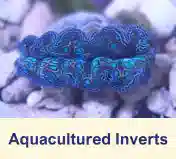
Captive bred fish – spawned and raised in a hatchery, from egg through to the size you receive. Aquacultured corals – grown out in land-based farms or managed ocean sites. Propagated frags – cuttings taken from an established parent colony and grown into new colonies. Tank raised invertebrates – shrimp, snails, clams and others reared in managed systems.
Bottom line: the common thread is that the animal was produced rather than collected, and its full history is known from the start.
They are related terms that describe different production methods. The hobby uses them loosely, so it helps to know what each one actually means.
The three terms:
Aquacultured – the broad umbrella. Any marine animal produced in a controlled setting rather than collected. Everything below sits underneath it. Captive bred – the animal was spawned and hatched in captivity, with parents that also lived in a managed system. This is the term you will see most often on fish. Propagated, or fragged – a piece cut from an existing coral colony and grown into a new one. Genetically identical to the parent, and standard practice for corals. Tank raised – reared in a managed system, sometimes from wild larvae or juveniles rather than from a captive spawn.
Bottom line: on a fish, look for captive bred. On a coral, aquacultured and propagated are both common and both mean the colony was farm grown.
An aquacultured animal has spent its whole life in a managed system, and it shows in how it settles in.
What aquaculture gives you:
Already eating prepared foods – captive bred fish are trained on pellets, flake and frozen from an early age. Familiar with aquarium life – tank walls, water movement, artificial lighting and feeding schedules are all normal. A short, documented journey – facility to holding to you, with the animal's history known throughout. Consistent quality and size – production batches make for predictable specimens. Corals grown under aquarium lighting – farm-grown colonies are already adapted to the kind of light and flow your tank provides. Access to rare genetics – designer clownfish morphs and named coral strains exist only through selective breeding and propagation.
Bottom line: aquaculture is a growing part of the hobby, not the whole of it. Wild collection still supplies most species and supports coastal communities around the world, and both have a place in a well-stocked aquarium.
From dedicated facilities around the world, each specializing in different animals.
The main production types:
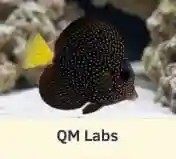
Marine fish hatcheries – land-based facilities running broodstock, larval rearing and grow-out. QM Labs in Los Angeles is one example, with more than 22 species raised to date including the world's first aquacultured Gem Tang. Specialist breeding programs – facilities such as Bali Aquarich, known for difficult species and unusual lines. Land-based coral farms – raceways and grow-out systems under controlled lighting and water chemistry. Ocean-based coral farms – managed sites where frags grow on racks in natural conditions.
Bottom line: where a specific facility is known, it appears directly in the product name, so you can see at a glance where an animal was raised.
Usually yes, because they were raised on the foods you will be offering. A hatchery fish is weaned onto prepared diets early and has been eating them ever since.
What that means at feeding time:
No transition needed – pellets, flake and frozen are already familiar. Confident feeding response – the fish associates you and the tank with food from day one. Easier to medicate or supplement – a fish that eats readily can be treated through its food. Simpler for a community tank – a new arrival that eats immediately is not outcompeted while it adjusts.
Bottom line: check the diet listed on each product page. Species requirements still apply, and a herbivore needs a herbivore diet regardless of where it was raised.
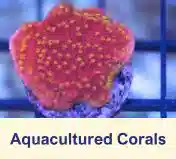
Aquacultured corals are among the most reliable additions you can make to a reef. A farm-grown colony has spent its life under aquarium-style lighting and flow, which is exactly the environment it is moving into.
Why they work so well:
Already light adapted – grown under LED or similar, so acclimating to your fixture is a shorter step. Encrusted on a plug or frag disc – ready to place, glue or mount without fuss. Known growth habit and color – you can see what the parent colony looks like. Named strains – the recognizable trade names in the hobby come from propagation. Small footprint to start – a frag lets you place a coral where you want it and grow it in.
Bottom line: browse our Aquacultured Corals selection for hundreds of farm-grown colonies and frags across soft, LPS and SPS.
Every species added to the captive-bred list is a permanent gain for aquarists.Pouil and colleagues (2020) counted 338 marine ornamental fish species successfully bred in captivity, and credited private companies and dedicated hobbyists with driving most of that progress.
What that progress delivers:
Species that were once unobtainable – fish like the Gem Tang exist in the hobby now because someone solved the larval rearing. Year-round availability – production cycles are not tied to weather or collecting seasons. Genetic lines that only exist in captivity – designer morphs and named coral strains are the direct product of breeding work. Steadily broadening supply – the list of species bred in captivity has grown substantially over the past two decades. Knowledge that compounds – techniques worked out on one species carry over to the next.
Bottom line: choosing aquacultured livestock supports the programs doing that work and helps fund the next species to be cracked.
Fish, corals and invertebrates, organized so you can go straight to what you are after.
Browse by type:
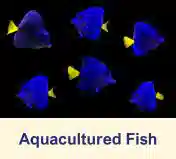
Captive Bred Fish – clownfish, dottybacks, gobies, blennies, angelfish, tangs, seahorses and more, all hatchery raised. Aquacultured Corals – hundreds of farm-grown soft, LPS and SPS colonies and frags. Aquacultured Invertebrates – tank raised shrimp, snails, clams and other reef inhabitants. Aquacultured by QM Labs – the designer clownfish morphs, dottybacks, gobies and landmark tangs from the QM Labs hatchery.
Bottom line: availability moves as each batch reaches size. If something you want is sold out, join the waiting list and we will email you when it returns.
It is a very good place to start. A fish that already eats prepared food and a coral already adapted to aquarium lighting both remove variables at the point where a new aquarist has the most to learn.
A sensible first list:
Captive bred clownfish – hardy, personable, and available in dozens of patterns. Captive bred gobies and dottybacks – small, colorful and well suited to modest tanks. Aquacultured soft corals – forgiving of light and water chemistry while you find your footing. Tank raised cleaner shrimp and snails – useful, active, and easy to keep. Start slowly – a few animals at a time lets your system keep pace.
Bottom line: read the reef safety, adult size, minimum tank size and diet on each product page. Those requirements come from the species itself, so check them for every animal you are considering.
Expect an animal that already knows the kind of environment it is going into.
Arrival day:
Acclimate slowly – drip acclimation over 45 to 60 minutes for fish, a shorter float and dip for corals. Dim the lights – lower light for the first several hours eases the transition for both. Offer food the same day – captive bred fish usually eat right away, and an early meal is a great sign. Place corals low at first – start a farm-grown coral lower in the tank and move it up gradually as it opens. Give fish cover – rockwork and hiding places help any new arrival settle in.
Bottom line: every order ships with our 8-Day Live Guarantee, so you are covered while your new arrival settles in. Browse the full Aquacultured Marine Life selection to see what is available today.