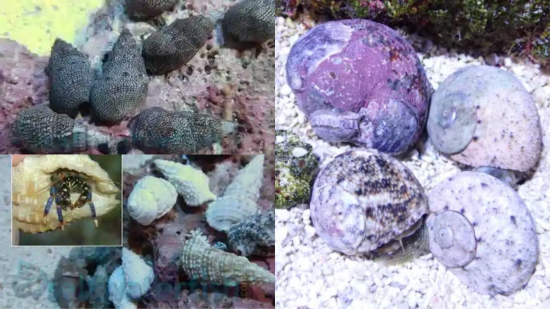
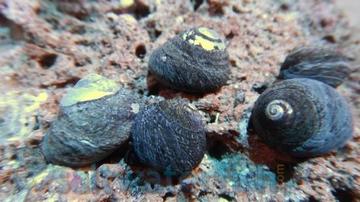
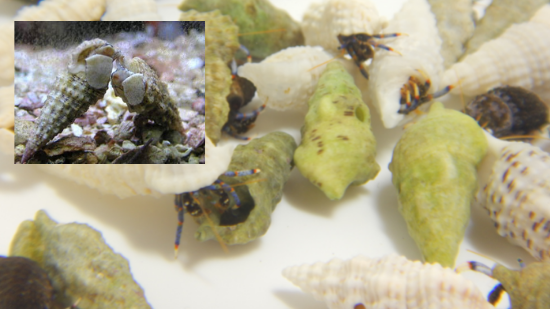
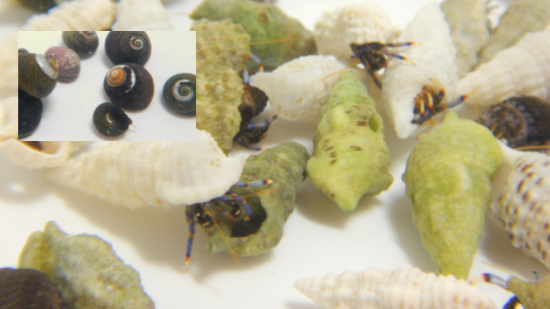
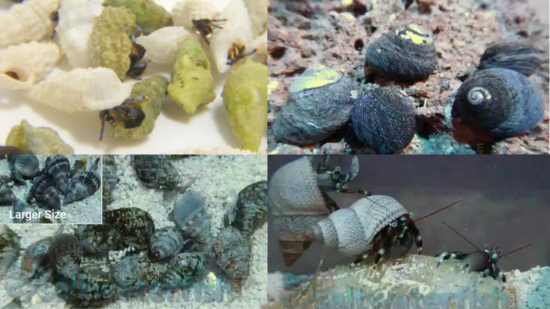
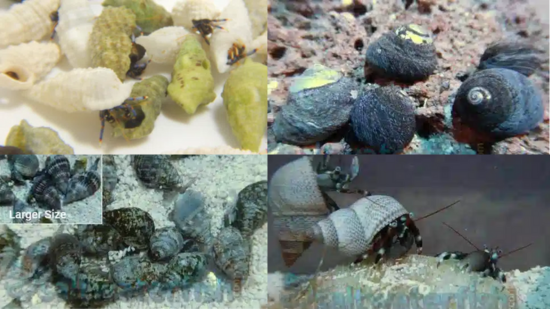
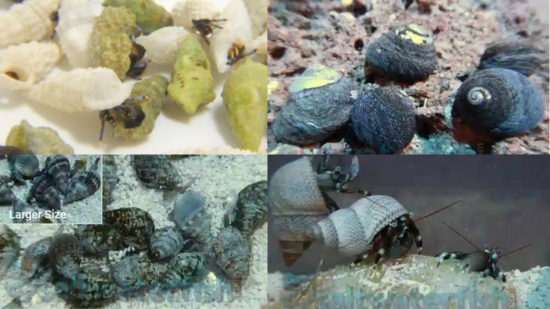
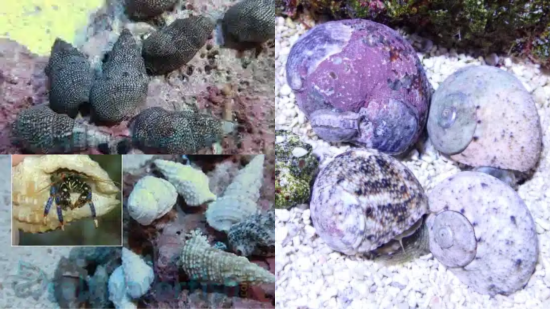
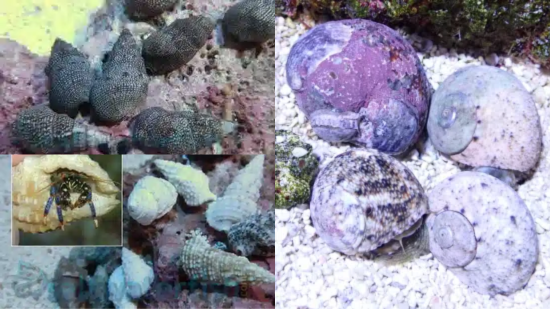
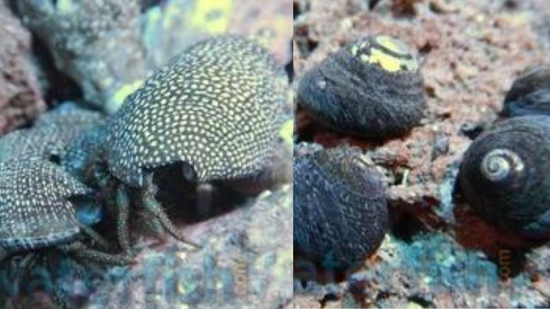
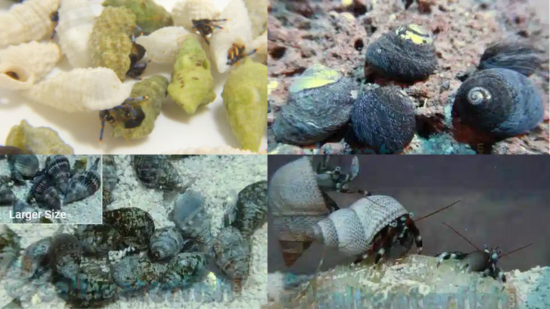
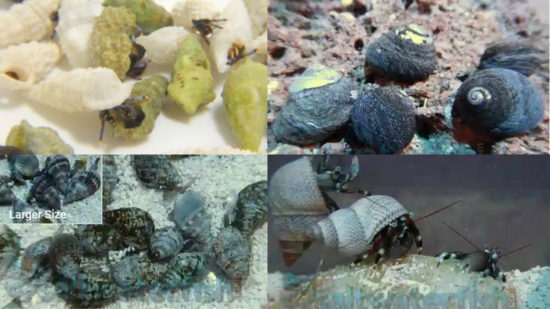
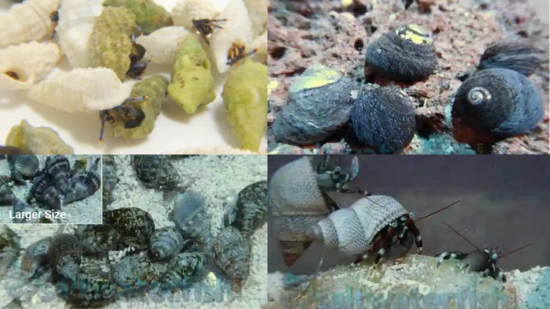
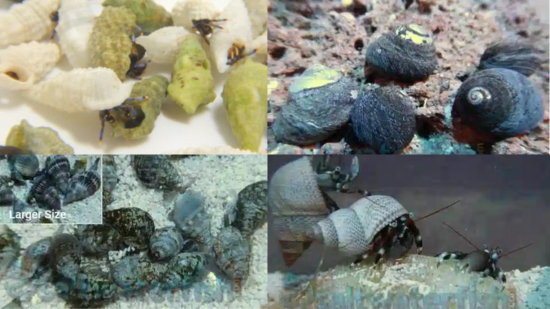
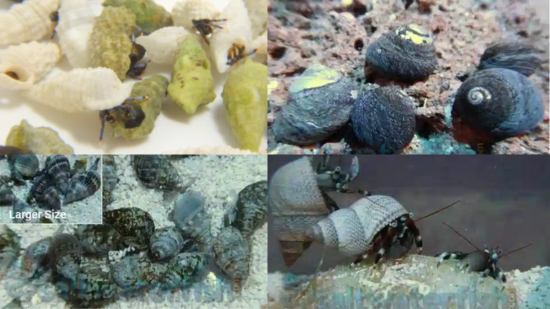
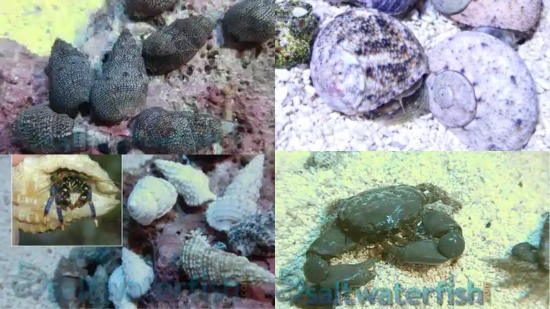
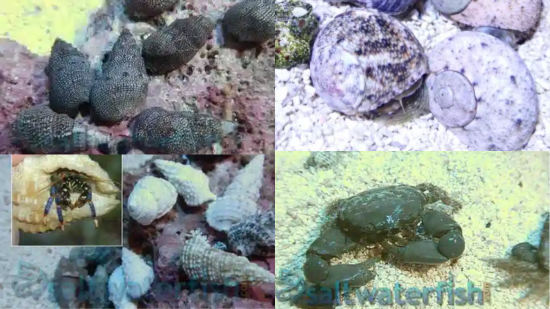
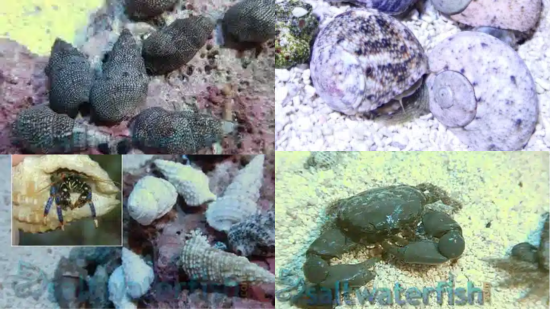
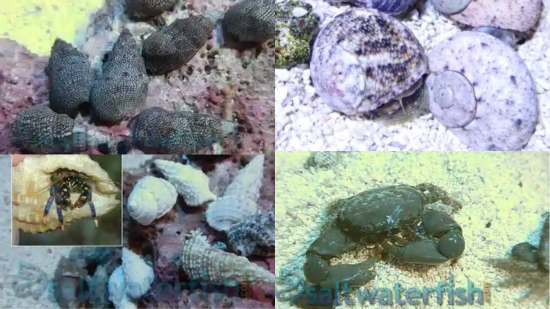
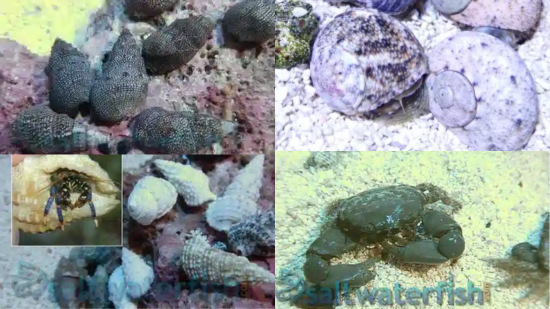
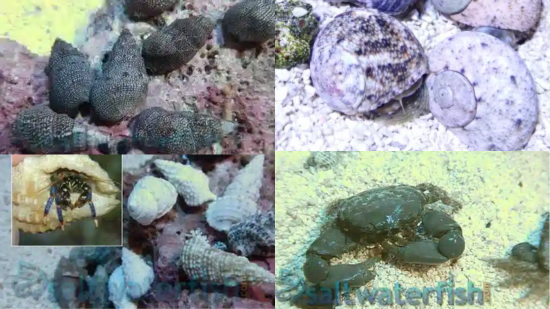
Reef packages, made up of hermit crabs, cleaner clams, snails and more, are a wonderful way to keep your marine aquarium clean and healthy. We have created various packages for different needs to offer a nice selection of popular saltwater aquarium creatures at a discounted group price. You will want to keep a generous amount of crabs and snails along with other cleaners, to control algae growth, detritus build up, and remove nitrates and phosphates. Reef packages are pre-selected to …
Reef packages, made up of hermit crabs, cleaner clams, snails and more, are a wonderful way to keep your marine aquarium clean and healthy. We have created various packages for different needs to offer a nice selection of popular saltwater aquarium creatures at a discounted group price. You will want to keep a generous amount of crabs and snails along with other cleaners, to control algae growth, detritus build up, and remove nitrates and phosphates. Reef packages are pre-selected to provide the best animals for your set up.
Please confirm your name and email address below.
We will contact you via email as soon as this product is
available.
Saltwater Reef Packages for Sale
Reef Packages from Saltwaterfish.com are convenient groups of helpful marine invertebrates selected to support a cleaner, healthier saltwater aquarium. Many hobbyists also call these packages saltwater clean up crews, because they may include animals that help eat algae, consume leftover food, stir sand, and reduce organic debris before it breaks down.
At Saltwaterfish.com, our saltwater Reef Packages may include popular aquarium cleaners such as hermit crabs, snails, cleaner clams, shrimp, crabs, starfish, sea cucumbers, and other useful marine invertebrates. Each package is designed to provide a practical mix of animals that perform different jobs in a reef tank or saltwater aquarium.
Reef Packages are a simple way to add a useful group of marine cleaners at a discounted package price. Instead of selecting every animal individually, these packages are pre-selected to help with different aquarium needs, tank sizes, and maintenance goals.
A properly chosen Reef Package can help control nuisance algae, consume detritus, remove uneaten food, stir the substrate, and support the overall balance of your marine aquarium. Reef Packages are useful for reef tanks, fish-only systems, nano aquariums, and new saltwater aquariums that are beginning to develop algae growth.
While Reef Packages are extremely helpful, they do not replace regular aquarium maintenance. Water changes, proper filtration, controlled feeding, stable water quality, and good husbandry are still essential. A Reef Package works best as part of a complete saltwater aquarium care routine.
Saltwaterfish.com inventory updates in real time, and new marine life may be added throughout the day. Check this section often for new Reef Packages, snails, hermit crabs, cleaner clams, shrimp, and other saltwater aquarium cleaners.
What Is a Reef Package?
A Reef Package is a pre-selected group of marine invertebrates added to a saltwater aquarium to help manage algae, detritus, leftover food, and organic debris. Many aquarium hobbyists refer to this type of package as a clean up crew, but at Saltwaterfish.com we call them Reef Packages.
Different animals perform different jobs, so a mixed Reef Package is often more effective than relying on one type of cleaner. Common Reef Package animals may include:
Hermit crabs to help scavenge leftover food and organic debris
Snails to graze on algae from glass, rockwork, and substrate
Cleaner clams to help filter small particles from the water
Shrimp to scavenge food and add activity to the aquarium
Crabs to help with algae and detritus depending on species
Starfish to help stir sand or consume organic matter depending on species
Sea cucumbers to process sand in suitable mature aquariums
Each Reef Package is designed to provide a useful mix of animals that support aquarium cleanliness and balance.
Benefits of a Saltwater Reef Package
Reef Packages can make a saltwater aquarium easier to maintain by helping with daily biological cleanup. These animals work throughout the aquarium, including on rockwork, substrate, glass, and other surfaces. A Reef Package may help:
Reduce algae growth on glass, rock, and substrate
Consume leftover food before it breaks down
Reduce detritus and organic debris
Stir and aerate the sand bed
Support a more natural reef environment
Add movement and biodiversity to the aquarium
Help maintain a cleaner-looking display between maintenance
The right Reef Package can improve both the appearance and function of your aquarium.
Choosing the Right Reef Package
The best Reef Package depends on your aquarium size, age, livestock, algae level, sand bed, rockwork, feeding habits, and maintenance routine. A smaller nano reef may need a lighter package, while a larger reef tank or fish-only aquarium may benefit from a more diverse group of cleaners. When choosing a Reef Package, consider:
Tank size: Larger aquariums generally need more cleaners than smaller tanks.
Algae level: Algae-grazing snails and crabs can help with nuisance algae.
Sand bed: Sand-sifting animals may help keep substrate cleaner.
Current livestock: Some fish may eat shrimp, snails, crabs, or other invertebrates.
Reef compatibility: Choose reef-safe cleaners for aquariums with corals.
Tank maturity: Some animals do better in established aquariums with natural food available.
Adding the right number and mix of cleaners helps prevent overcrowding while making sure there is enough food available for the animals in the package.
Snails, Hermit Crabs, Cleaner Clams & Other Reef Package Animals
Different Reef Package animals specialize in different tasks.
Snails are among the most popular saltwater aquarium cleaners. Many aquarium snails graze on algae from glass, rockwork, and substrate. Depending on the species, snails may help with film algae, diatoms, leftover food, and detritus.
Hermit crabs are active scavengers that move across rockwork and substrate searching for leftover food, algae, and organic debris. They are popular additions to many reef tanks and fish-only aquariums.
Cleaner clams are filter-feeding invertebrates that can help remove small particles from the water column. They are often included in Reef Packages as part of a broader aquarium-cleaning group.
Shrimp, crabs, starfish, and sea cucumbers may also be included in some Reef Packages depending on the needs of the aquarium and current availability. These animals can add movement, variety, and additional cleaning functions to a saltwater aquarium.
Saltwater Reef Packages: FAQ
A Reef Package is a pre-selected group of marine invertebrates chosen to help support a cleaner saltwater aquarium. Rather than selecting individual cleaners one at a time, you get a coordinated mix of animals that complement each other.
Reef Packages may include:
Snails — for algae grazing on glass, rock, and substrate
Hermit crabs — for scavenging leftover food and debris
Cleaner clams — for filtering small particles from the water
Shrimp — for activity and scavenging
Crabs — for algae and detritus depending on species
Starfish and sea cucumbers — for sand and substrate work in suitable tanks
Each package is built around a specific cleaning function — algae control, detritus removal, sand bed maintenance, or a combination.
Bottom line: A Reef Package is the most efficient way to put a working cleanup team into your tank without piecing it together yourself.
Yes. Many hobbyists use the term clean up crew (often abbreviated "CUC") to describe a group of aquarium cleaners. At Saltwaterfish.com, we call these groups Reef Packages.
Both terms refer to the same concept:
A pre-selected mix of marine invertebrates bundled together
Chosen to help with algae, leftover food, detritus, and general cleanup
Sold as a group at a discounted price compared with buying each animal separately
Designed to cover multiple cleaning roles rather than just one
The naming is just a matter of preference — the function is identical.
Bottom line: If you've heard of a "clean up crew" before, a Reef Package is the same thing under a different name.
Most saltwater aquariums benefit significantly from a Reef Package. These animals do constant, low-effort work that helps your tank look better and reduces the load on your maintenance routine.
What a Reef Package helps with day-to-day:
Algae grazing on glass, rockwork, and substrate
Scavenging leftover food before it decays
Reducing visible detritus and organic debris
Stirring sand to prevent dead spots
Adding biodiversity and natural reef behavior
That said, a Reef Package is not a substitute for proper aquarium care. Water changes, filtration, water testing, and controlled feeding remain essential.
Bottom line: Almost every saltwater tank works better with a Reef Package — but only as a complement to good husbandry, never a replacement for it.
Reef Packages vary in composition based on tank size, intended purpose, and current availability. Most packages include a coordinated mix of animals that perform different cleaning roles.
Common Reef Package animals:
Hermit crabs — active scavengers across rock and substrate
Snails — turbo, trochus, nassarius, cerith, and other algae grazers
Cleaner clams — passive filter feeders
Shrimp — including peppermint, cleaner, and other species when available
Crabs — emerald and similar species for algae and detritus
Starfish — serpent stars or sand-sifting varieties depending on the package
Sea cucumbers — for processing sand in mature aquariums
Other helpful marine invertebrates as availability allows
The exact mix in any given package depends on which animals are best suited to the tank size and cleanup goals the package is designed for.
Bottom line: Each package is built around its intended purpose — algae control, detritus removal, sand bed work, or a balanced mix of all three.
Reef Package animals consume a wide range of organic material in the aquarium. Diet varies by species, which is why a mixed package is more effective than relying on one type of cleaner.
What Reef Package animals typically eat:
Algae — film algae, hair algae, diatoms, and similar growth
Leftover food — uneaten pellets, flakes, and frozen food
Detritus and organic debris on rock and substrate
Small particles in the water column — for filter feeders like clams
Decaying organic matter before it breaks down further
If your aquarium is very clean or lightly stocked, some Reef Package animals may need supplemental feeding — algae sheets for grazers, sinking pellets for scavengers, or phytoplankton for filter feeders.
Bottom line: Match the Reef Package to what your tank actually produces. An overly clean tank can starve cleaners; an overloaded tank may overwhelm them.
Reef Packages help indirectly with nutrient control, but they don't remove nitrates and phosphates the way filtration equipment does.
How Reef Packages support nutrient control:
Consume uneaten food before it decays into nitrate and phosphate
Reduce algae growth that would otherwise tie up nutrients in the tank
Process detritus that contributes to long-term nutrient buildup
Limit the source material that drives nutrient spikes
However, they do not replace:
Filtration — mechanical and biological media
Water changes — the most reliable nutrient export method
Protein skimming — for removing dissolved organics
Chemical media — like GFO or carbon when needed
Bottom line: Reef Packages reduce the input side of the nutrient equation. Your filtration handles the output side. Both matter.
Many invertebrates in a Reef Package are dedicated algae grazers. Because different species eat different types of algae, the most effective approach is a varied mix.
Reliable algae-eating Reef Package animals:
Turbo snails — large grazers that move through hair and film algae quickly
Trochus snails — workhorse grazers good on glass and rock
Cerith snails — small grazers that work substrate and glass
Astrea snails — film algae specialists
Hermit crabs — opportunistic grazers in addition to scavenging
Emerald crabs — known for tackling bubble algae and hair algae
Sea urchins — voracious grazers for larger, mature tanks
A varied Reef Package is far more effective than relying on a single species — different grazers cover different algae types and different areas of the tank.
Bottom line: The more diverse your grazer mix, the more types of algae get controlled simultaneously.
Several Reef Package animals work the sand bed specifically, either by stirring substrate, consuming buried debris, or processing sand directly.
Sand bed cleaners commonly included in Reef Packages:
Nassarius snails — burrow under the sand and emerge to scavenge leftover food
Conchs — slowly plow through sand, eating detritus and algae
Sand-sifting starfish — useful in larger systems, though they can deplete microfauna in smaller tanks
Sea cucumbers — process sand grain by grain in mature aquariums
Cerith snails — small but effective on the substrate surface
Choose sand bed cleaners based on tank size, sand depth, aquarium maturity, and available food — undersized tanks can quickly starve specialty sand cleaners.
Bottom line: A mix of surface and burrowing sand cleaners keeps your substrate looking fresh and prevents detritus buildup that drives nuisance algae.
Many Reef Package animals are considered reef safe, but not every species in every package is appropriate for every reef tank.
Typically reef-safe Reef Package animals:
Most aquarium snails — turbo, trochus, nassarius, cerith
Small hermit crabs — peaceful scavengers
Cleaner shrimp — and most ornamental shrimp
Serpent and brittle stars — durable, reef-friendly
Species that warrant extra caution in reef tanks:
Some larger crabs may eventually prey on snails or shrimp
Sand-sifting starfish may disturb corals on the sand bed
Sea cucumbers can release toxins if stressed or killed
Larger sea urchins may knock over loose corals
Bottom line: Always review the care details for each package or species before adding to a reef aquarium with corals or sensitive invertebrates.
Timing matters. A Reef Package is generally added after the aquarium has cycled and begins to show signs of algae or available food for the cleaners.
Good signs your tank is ready for a Reef Package:
Cycle is complete — ammonia and nitrite both reading zero
Algae is beginning to appear — diatoms, film algae, or early hair algae
You've been feeding — providing organic input the cleaners can work with
Parameters are stable — salinity, temperature, and pH holding steady
Avoid these common timing mistakes:
Adding cleaners before the cycle finishes — they may not survive the ammonia and nitrite spikes
Adding too many too early — they can starve if there isn't enough food yet
Waiting too long — nuisance algae can take hold and become harder to control
Bottom line: Wait for the cycle to complete and for the first signs of algae — that's the sweet spot for adding your first Reef Package.
There's no universal formula. The right number depends on a combination of factors specific to your tank.
Key variables that determine cleaner quantity:
Aquarium size — larger tanks support and require more cleaners
Algae growth — more algae justifies more grazers
Feeding level — heavier feeding means more leftover food to scavenge
Rockwork surface area — more surface means more grazing territory
Sand bed size — relevant for nassarius snails, conchs, and similar
Specific species selected — a turbo eats much more than a cerith
General approach: Start with a reasonable number and add more as needed. Overcrowding cleaners is a real risk — too many grazers in a clean tank leads to starvation and die-offs that worsen water quality.
Bottom line: Understocking is recoverable. Overstocking creates problems. Start lighter than you think and scale up based on what your tank actually needs.
Yes — many Reef Package animals coexist well with saltwater fish, but compatibility depends entirely on which fish you keep. Some species view shrimp, snails, and crabs as food.
Fish that often cause problems for Reef Package animals:
Puffers — crush snails, shrimp, and small crabs
Triggers — predatory toward most inverts
Larger wrasses — hunt shrimp, snails, and small crabs
Hawkfish — known shrimp hunters
Larger aggressive fish — lionfish, groupers, large angels
Fish that typically coexist well with Reef Packages:
Clownfish, gobies, blennies, chromis, anthias
Most peaceful community species
Smaller reef-safe wrasses like fairy and flasher varieties
Bottom line: Match your Reef Package to your fish list before buying — losing a cleanup crew to a predator the same week you bought it is a preventable expense.
No. Reef Packages assist with daily cleanup, but they don't replace any of the core aquarium maintenance tasks.
A Reef Package does NOT replace:
Water changes — still the most reliable way to manage nutrients
Filtration — mechanical, biological, and chemical media
Water testing — for ammonia, nitrite, nitrate, alkalinity, calcium, and other parameters
Proper feeding — measured portions matched to your livestock
Glass cleaning — magnets and scrapers for what cleaners can't reach
General husbandry — equipment maintenance, salt mixing, top-offs
Think of a Reef Package as a useful supplement, not a maintenance shortcut.
Bottom line: Reef Packages reduce visible algae and debris between maintenance, but the foundation of a healthy saltwater tank is still your hands-on care routine.
Reef Packages offer real advantages over piecing together a cleanup crew animal by animal.
Why choose a Reef Package:
Balanced selection — pre-chosen mixes that cover multiple cleanup roles
Discounted group price — packages cost less than buying each animal separately
Simpler decision-making — no need to research every species individually
Easier sizing — packages are matched to common tank sizes and cleanup needs
One coordinated shipment — animals acclimate together in a single delivery
For most hobbyists — especially newer ones — a Reef Package is the most efficient way to get a working cleanup crew into the tank.
Bottom line: Same animals, lower total cost, less decision fatigue — Reef Packages are the easy button for getting your cleanup team in place.
Saltwaterfish.com inventory updates in real time, and new marine life may be added throughout the day as availability changes.
Check this category often for:
New Reef Packages in various sizes and configurations
Snails — turbo, trochus, nassarius, cerith, and more
Hermit crabs for cleanup and scavenging
Cleaner clams as availability allows
Shrimp and other invertebrates that complement Reef Packages
Reef Package availability shifts based on which underlying invertebrate species are currently in stock and in good shipping condition.
Bottom line: Bookmark the category and check back often — packages and individual cleaners rotate continuously as new livestock arrives.