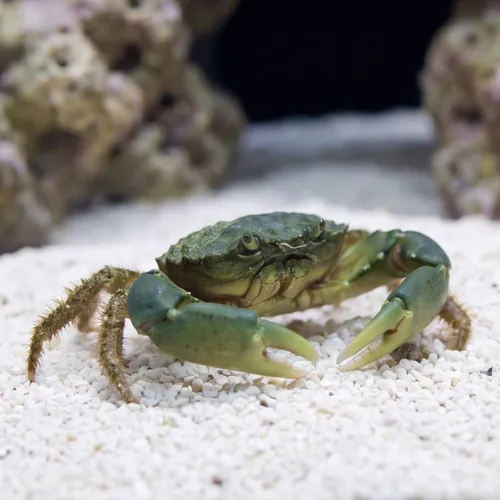
Emerald Crab
Mithrax sculptus
(66 Reviews)
Emerald Crab
Mithrax sculptus
(66 Reviews)
Emerald Crab - USA
Size: < 2 inches
$14.99
To join the waiting list, click here
Free Shipping
With
$199.00
or more in Marine Life.
More details...

Emerald Crab Care Facts
| Care Level: | Easy |
|---|---|
| Temperament: | Peaceful |
| Diet: | Omnivore |
| Reef Safe: | Yes |
| Minimum Tank Size: | 15 Gallons |
| Max Size: | 2 inches |
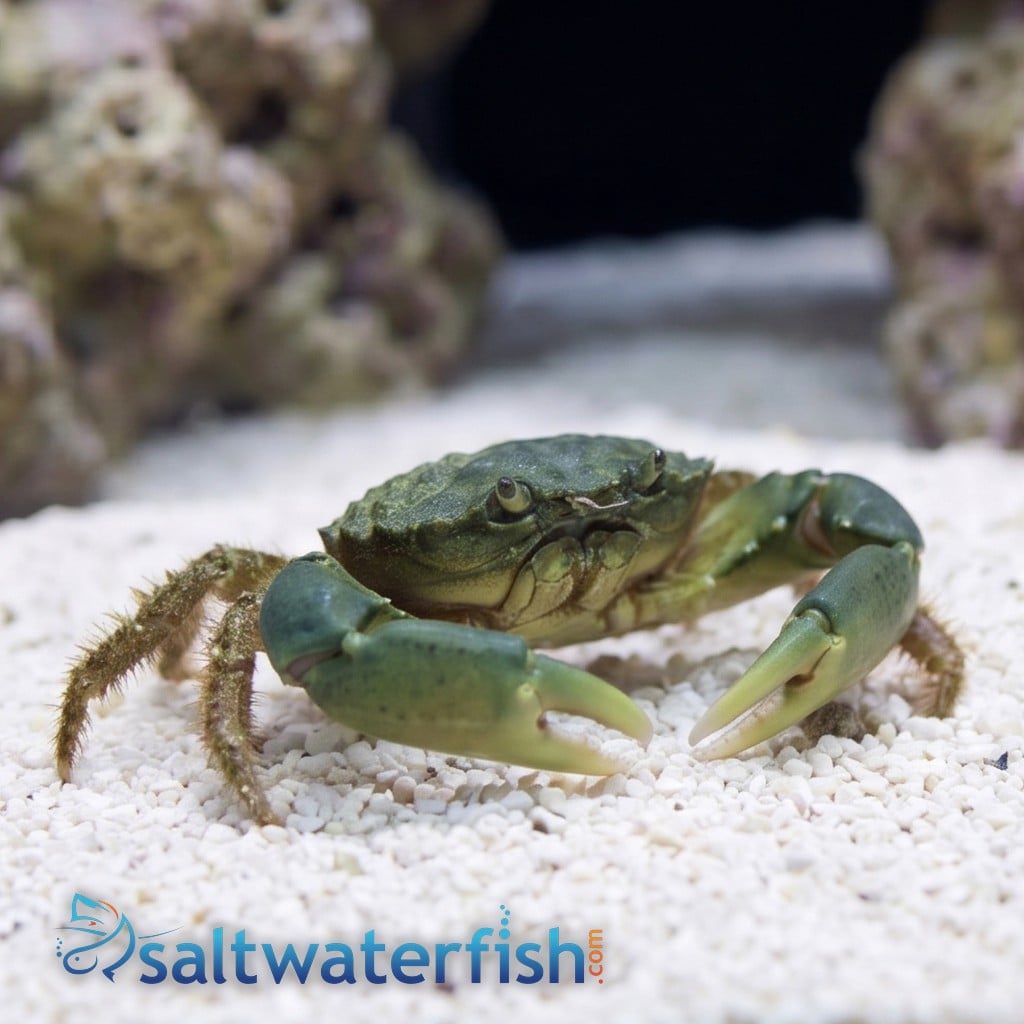
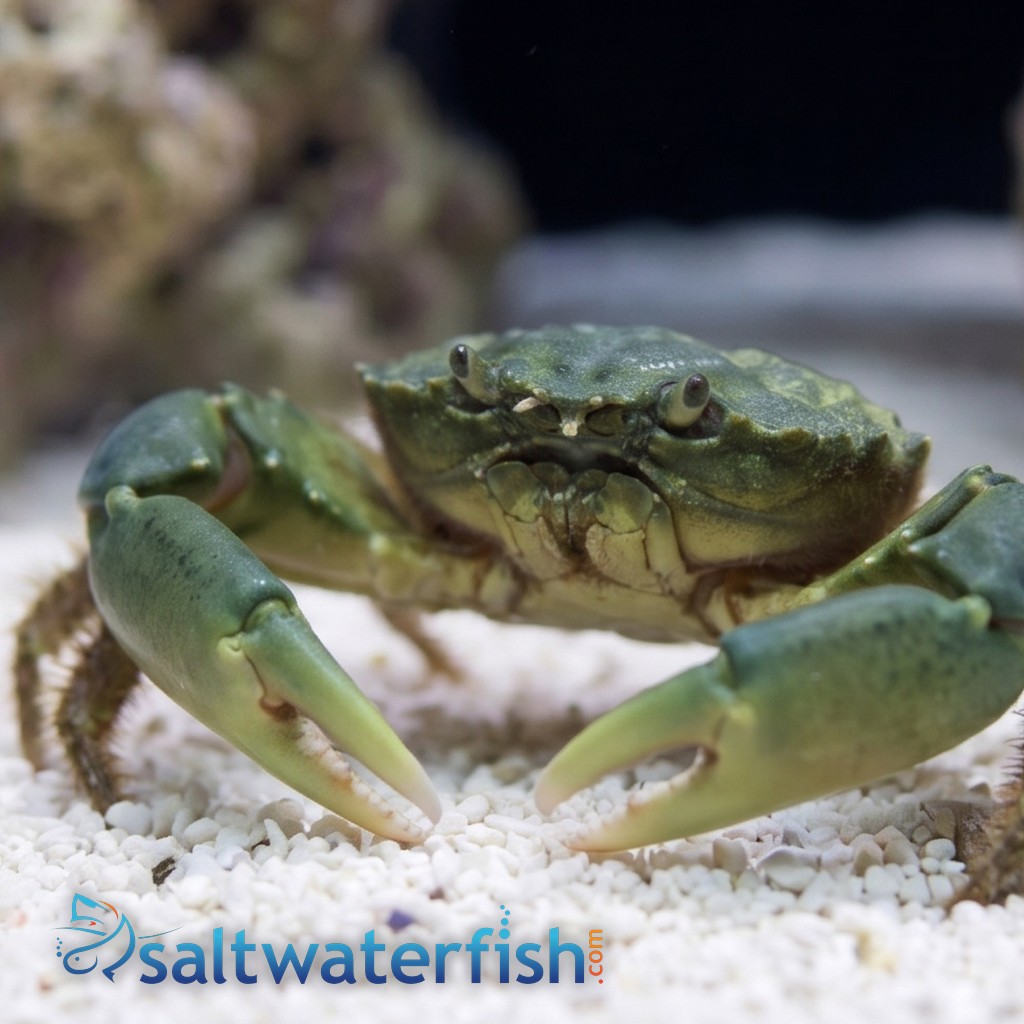
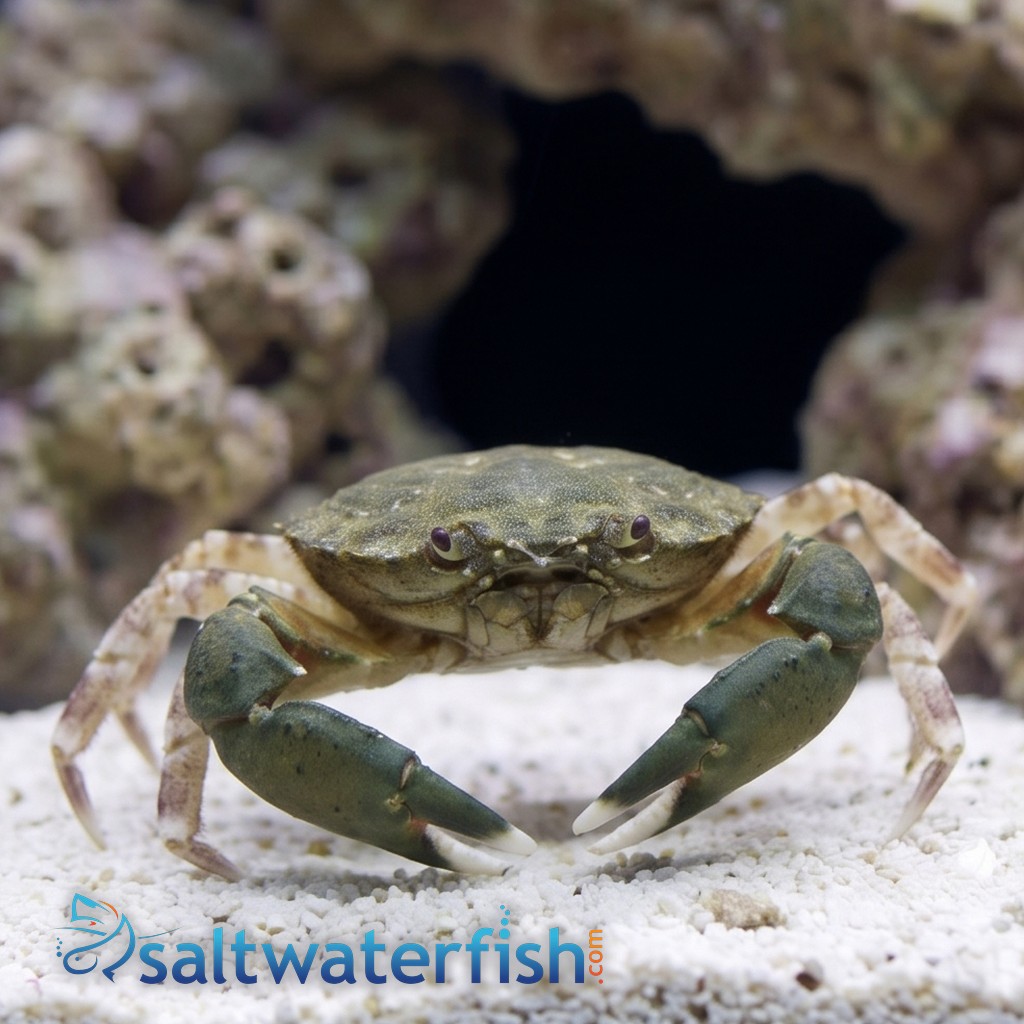
The Emerald Crab, Mithrax sculptus, are one of the most popular marine crab species for the home aquarium. They thrive in tanks with plenty of live rock and a sandy substrate as the like to graze searching for algae. As voracious algae-eaters, they can be incredibly beneficial members of a cleanup crew. If there is not enough algae or seaweed, they can be supplementally fed with prepared meaty foods. They should, however, be fed regularly to keep them from becoming aggressive towards their tank mates. Emerald Crabs are particularly effective against bubble algae. There is a reason emerald crabs are so popular; they are very easy to care for, require almost no attention, and are effective in in controlling pesky algal blooms hence keeping the tank clean.
The Emerald Crab: A Molting Feeding Friend for Saltwater Aquariums
The Emerald Crab (Mithrax sculptus) is a delightful and eye-catching addition to saltwater aquariums. With its striking emerald-green color and unique characteristics, this crab has become a sought-after choice among marine aquarists. Let's explore the Emerald Crab's habitat, reef-safe nature, size, lifespan, diet, aquaculture potential, molting process, other common names, and compatible tank mates.
Habitat of the Emerald Crab
The Emerald Crab is native to the warm waters of the Western Atlantic Ocean, ranging from the coast of Florida to the Caribbean and Gulf of Mexico. In the wild, they inhabit rocky shores, coral reefs, and intertidal zones.
Reef Safe and Algae Control
The Emerald Crab is generally reef-safe and poses no threat to corals or other invertebrates. On the contrary, they benefit reef aquariums as they help control unwanted algae growth.
Size and Lifespan
Emerald Crabs are relatively small, typically growing up to 1.5 to 2 inches (3.8 to 5 cm) in carapace width. They can live for two to three years in a well-maintained aquarium with proper care.
Diet and Algae Eating Abilities
In their natural habitat, Emerald Crabs are omnivores, feeding on algae, detritus, and small invertebrates. In a home aquarium, they are excellent algae eaters, helping to keep the tank clean and free from excessive algae growth.
Aquaculture and Sustainability
The Emerald Crab is available in the aquarium trade, and captive-bred specimens are also accessible. Breeding and propagating this crab in captivity have been successful, making it a sustainable and eco-friendly choice for marine aquariums.
Molting Process
Like other crustaceans, Emerald Crabs undergo molting, a process where they shed their exoskeleton to grow larger. The crab is vulnerable to predation and stress during molting, so providing ample hiding spots and a secure environment is crucial.
Other Common Names
In addition to the name "Emerald Crab" or "Green Emerald Crab," this species is also known as the "Green Clinging Crab."
Compatible Tank Mates
Peaceful snail species like Astrea snails or Trochus snails can coexist with the Emerald Crab. Snails contribute to algae control, complementing the crab's role as an algae eater.
Some species of hermit crabs can be suitable tank mates for the Emerald Crab, provided they have sufficient shells to inhabit.
Peaceful blennies are also compatible tank mates. Blennies come in various colors and patterns, adding character to the tank.
Peaceful gobies can cohabit harmoniously with the Emerald Crab. Their small size and diverse range of colors make them great additions to the aquarium.
The peaceful Cleaner Shrimp (Lysmata amboinensis) can be compatible tank mates. They provide an interesting dynamic with their symbiotic cleaning behavior.
In conclusion, the Emerald Crab (Mithrax sculptus) is an enchanting and valuable addition to saltwater aquariums. Its striking appearance and algae-eating abilities make it an excellent choice for reef aquariums seeking a natural and effective algae control solution. Aquarists can enjoy the charm and practicality of these emerald-green gems in their aquatic havens by providing them with a suitable environment and compatible tank mates.
Arrived on time and healthy
Reviewed by: Carl Johnsen on Aug. 18, 2026
Acclimated and off to work.
Reviewed by: Russ Levenson Jr on May 18, 2026
Reviewed by: Christopher Corbett on March 26, 2026
Reviewed by: Don Miller on March 19, 2026
Went straight to eating bubble algae
Reviewed by: Justin Forster on March 2, 2026
Looked very health upon arrival.
Reviewed by: Andrew Flagg on Feb. 16, 2026
Reviewed by: Michelle Liggis on Feb. 11, 2026
Healthy
Reviewed by: Samuel Edwards on Jan. 19, 2026
Reviewed by: Mikko Lavalley on Jan. 14, 2026
Reviewed by: Carter Grindol on Jan. 11, 2026
3 of 4 where alive
Reviewed by: Mark Ehnot on Dec. 29, 2025
I belive they are still alive
Reviewed by: Brent Patterson on Dec. 24, 2025
Reviewed by: Corinne Malanoski on Dec. 21, 2025
Reviewed by: Jeffrey Helaney on Dec. 15, 2025
Reviewed by: Mandy Rodriguez on Dec. 14, 2025
Reviewed by: Melinda Martin on Dec. 9, 2025
Healthy, vibrant, good additions to tank.
Reviewed by: Russ Levenson on Nov. 19, 2025
Reviewed by: Dawn Celentano on Nov. 19, 2025
Reviewed by: Gary Stennett on Oct. 27, 2025
Reviewed by: John Arcuri on Oct. 10, 2025
A+ Went right to work when acclimated.
Reviewed by: Jay Baughman on Aug. 26, 2025
Alive and well!!
Reviewed by: Michael Alexander on Aug. 19, 2025
Reviewed by: David Grass on Aug. 3, 2025
Received 2 as ordered. They both are very active and seem to be healthy. They immediately started eating algae when placed in the tank.
Reviewed by: Marji Zartler on July 22, 2025
Reviewed by: Tanner Eaton on July 21, 2025
Reviewed by: Josh Simpson on June 4, 2025
Reviewed by: Jason Laframboise on May 27, 2025
Reviewed by: William Osmundsen on May 25, 2025
Reviewed by: Candyce Adams on May 20, 2025
This little guy is chomping away on the bubble algae. I love him!
Reviewed by: Lynnzy Mcintosh on May 19, 2025