Dive In: Top Spots for Reef Tank Fish for Sale


Why Finding the Right Reef Tank Fish for Sale Matters
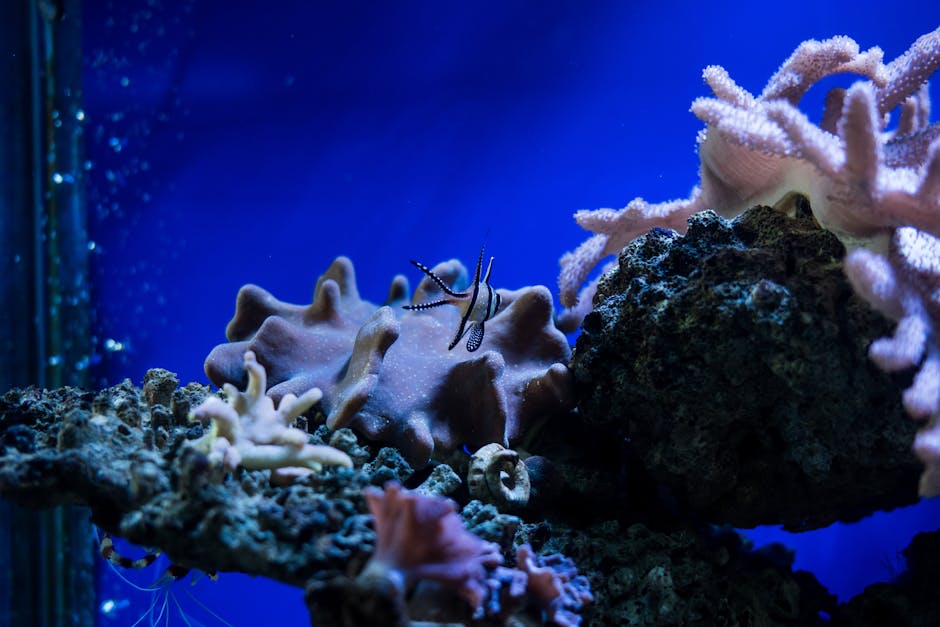
Reef tank fish for sale can be found through various online retailers and local aquarium stores, but choosing the right source is critical. When sourcing healthy, high-quality marine fish, find a supplier that prioritizes the health and quality of their livestock.
What to Look For in a Quality Supplier:
- Guaranteed Healthy Delivery: Look for retailers that stand behind their livestock with a money-back guarantee. At Saltwaterfish.com, we offer an 8-day+ money-back guarantee and have over 5,000 5-star reviews.
- Transparent Sourcing: A good supplier is clear about where their fish come from, offering both aquacultured and responsibly hand-caught marine life.
- Clear Policies and Options: Seek out clear shipping policies, live arrival guarantees, and WYSIWYG (What You See Is What You Get) options for specific specimens.
- Sustainable Choices: Look for suppliers that offer captive-bred options when available for hardiness and sustainability.
Building a thriving reef aquarium starts with choosing the right fish from the right source. The difference between a struggling tank and a vibrant underwater ecosystem often comes down to the health of your livestock when it arrives at your door.
The marine aquarium industry has evolved significantly over the past two decades. Where hobbyists once relied solely on wild-caught specimens of uncertain origin, today's reef keepers can access captive-bred fish that adapt better to aquarium life, tolerate shipping stress more effectively, and arrive virtually disease-free. Yet finding a reliable retailer with consistent inventory, transparent sourcing, and genuine health guarantees remains a challenge for many aquarists.
Whether you're setting up your first nano reef or expanding an established system, knowing where to buy and what to look for makes all the difference. From peaceful clownfish to algae-grazing tangs, reef-compatible angelfish to industrious clean-up crews, the right fish will bring your underwater vision to life.
I'm Scott Hughes, Founder and Owner of Deep Blue Seas, LLC, the parent company behind Saltwaterfish.com, one of the largest online marine life retailers in the U.S. Over the past 20 years, I've helped thousands of reef keepers find healthy reef tank fish for sale while improving industry quality standards and promoting sustainable aquaculture practices. This guide will walk you through the best places to buy reef fish and what to consider before making your purchase.
What to Consider Before You Buy
Starting on the journey of setting up a reef tank is incredibly exciting, but choosing the right reef tank fish for sale is paramount to your long-term success. It's not just about picking the prettiest fish; it's about ensuring each inhabitant can thrive in your specific system and coexist peacefully with its tank mates. Research is key, and we're here to guide you through the most important factors.
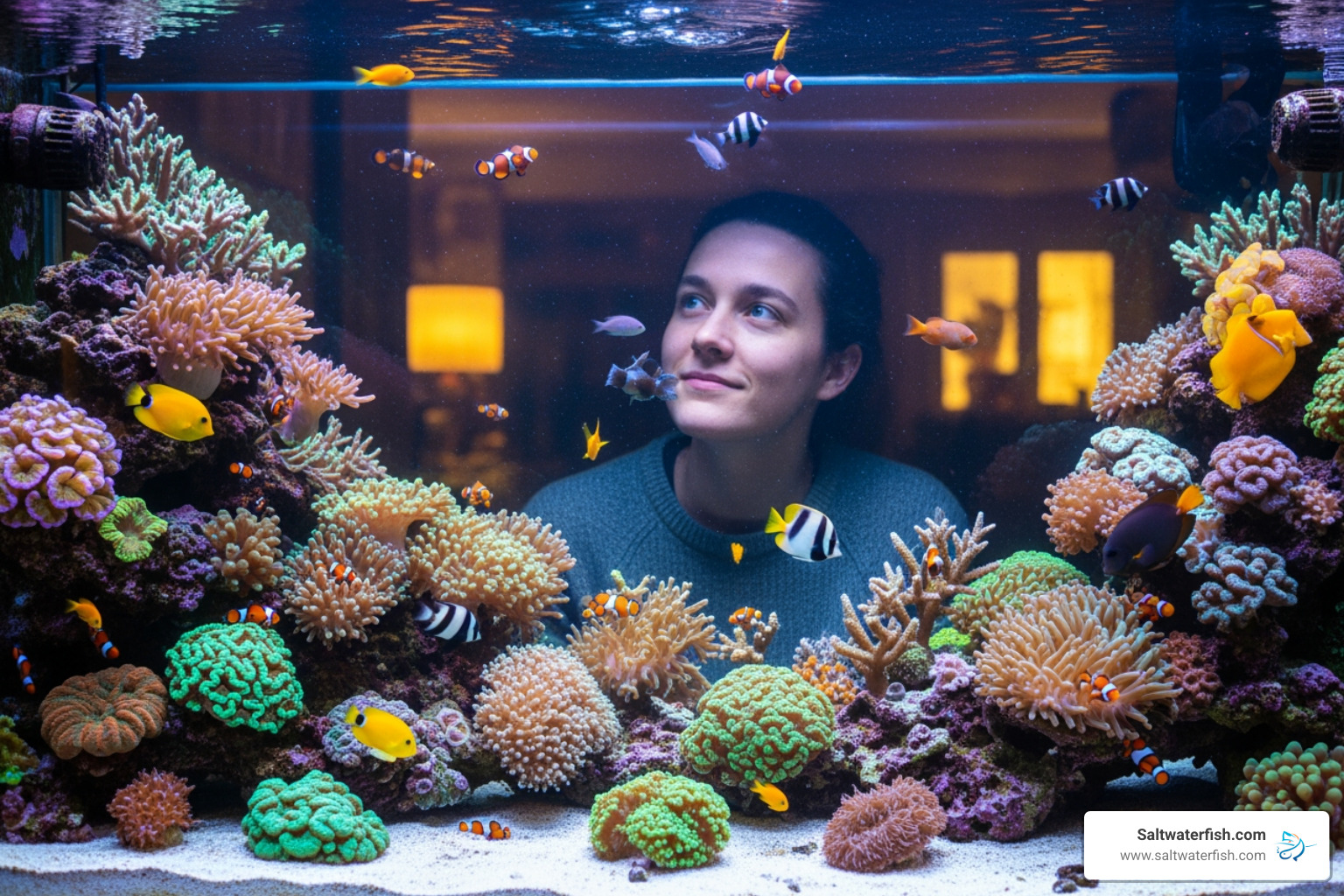
Key Factors for Selecting Fish
When you're looking for reef tank fish for sale, several critical factors should influence your decision to ensure a harmonious and healthy environment:
- Tank Size: This is perhaps the most fundamental consideration. Every fish has a minimum tank size requirement. For example, while a clownfish might be happy in a 20-gallon tank, a tang typically needs at least 70-125 gallons, depending on the species. Overcrowding leads to stress, aggression, and poor water quality. Always plan for the fish's adult size, not just its current juvenile size.
- Temperament: Fish temperaments range from peaceful to aggressive. A peaceful goby might be terrorized by a semi-aggressive angelfish, leading to stress, disease, or even death. Research the temperament of each species you're considering and ensure they are compatible with your existing inhabitants. Our detailed guides can help you understand Which Saltwater Fish Types Are Not Compatible?.
- Diet: Different fish have different dietary needs. Some are herbivores (like tangs, which graze on algae), some are carnivores (like lionfish, which eat meaty foods), and many are omnivores. A varied diet, custom to each fish, is crucial for their health and vibrant coloration. Learn How to Fulfill the Dietary Needs for Saltwater Fish Effectively.
- Reef Compatibility: This is vital for reef tanks, which contain corals and other invertebrates. Some fish, like certain angelfish or butterflyfish, are known to nip at corals or clam mantles. While some are "reef safe with caution," others are best kept in fish-only or FOWLR (Fish Only With Live Rock) systems. Always check a fish's reef compatibility before adding it to a coral-filled tank.
- Maximum Size: As mentioned with tank size, always consider how large a fish will grow. A small, cute juvenile can quickly outgrow its home, leading to problems for both the fish and the hobbyist.
Captive-Bred vs. Wild-Caught
When exploring reef tank fish for sale, you'll often encounter the terms "captive-bred" and "wild-caught" (or "hand-caught"). Understanding the difference is crucial for both the health of your aquarium and the sustainability of our hobby.
Captive-Bred Fish: These fish are born and raised in controlled aquarium environments. The benefits are numerous:
- Sustainability: Purchasing captive-bred fish supports aquaculture, reducing pressure on wild marine populations. This aligns with our strong Sustainability Mandate.
- Hardiness & Adaptation: Aquacultured fish are accustomed to aquarium life, prepared foods, and typical water parameters, making them hardier and less prone to stress during shipping and acclimation. They adapt much better to their new homes.
- Disease Resistance: Often, captive-bred fish are raised in pathogen-free environments, making them less likely to carry common marine diseases like Ich or Marine Velvet. Many are virtually ich, pest, and disease-free.
- Social Behavior: Some captive-bred species, like the BIOTA Coral Beauty Angelfish, are even noted to be more social than their wild counterparts.
Wild-Caught (Hand-Caught) Fish: These fish are collected from their natural ocean habitats. While they offer a broader range of species and unique patterns, they come with different considerations:
- Sourcing: Reputable suppliers, like us, use responsible hand-catching methods to minimize stress and damage to the fish and their environment.
- Stress & Acclimation: Wild-caught fish can experience more stress during collection, transport, and adaptation to an aquarium. They may require longer acclimation periods and careful observation.
- Disease Risk: They can potentially carry parasites or diseases from their natural environment.
We strongly advocate for Responsible Aquaculture for a Healthy Aquarium. Wherever possible, we offer aquacultured options as a healthier and more sustainable choice for your reef tank.
Signs of a Healthy Fish
Ensuring you're purchasing a healthy specimen is key to avoiding heartache and potential disease outbreaks in your display tank. When inspecting reef tank fish for sale, whether in person or through detailed WYSIWYG photos, look for these tell-tale signs:
- Clear Eyes: The fish's eyes should be bright, clear, and free of cloudiness or bulging.
- Intact Fins: Fins should be fully extended, free of rips, tears, or fraying. They should not be clamped against the body.
- Active Swimming: The fish should be swimming actively and purposefully. Avoid fish that are listless, gasping at the surface, or hiding excessively (unless it's a naturally shy species).
- No Spots or Blemishes: Look for any white spots (Ich), white film (Marine Velvet), or other visible lesions or abnormalities on the body or fins.
- Good Appetite: A healthy fish will typically show interest in food. If possible, observe feeding behavior.
- Proper Respiration: Gills should be moving steadily and not rapidly. Rapid breathing can indicate stress or illness.
At Saltwaterfish.com, we go to great lengths to ensure the health of our marine life. Our fish undergo a thorough acclimation process to ensure healthy and disease-free specimens. This rigorous process, combined with our 8-day+ money-back guarantee on healthy delivery, gives you peace of mind. Proper Acclimation upon arrival is also crucial for their transition.
Popular Categories of Reef Tank Fish for Sale
The diversity of reef tank fish for sale is astounding, offering a kaleidoscope of colors, shapes, and behaviors to bring your underwater world to life. From iconic beginner-friendly species to stunning centerpiece fish, there's a perfect match for almost any reef system.
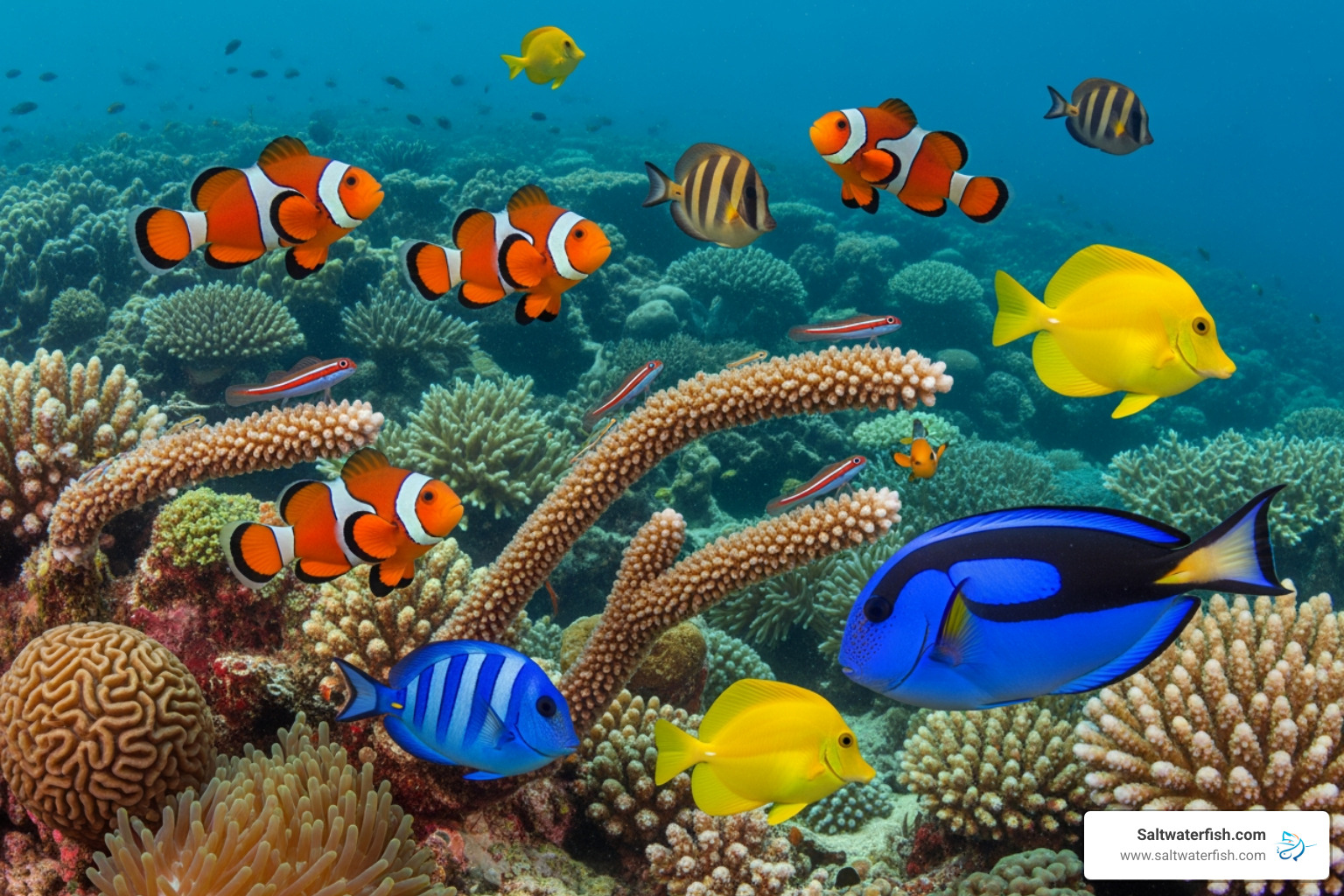
Clownfish: The Aquarium Icon
When most people think of saltwater fish, the vibrant and charismatic clownfish often comes to mind. These hardy, relatively small fish are a staple in many reef tanks, known for their distinctive patterns and often playful personalities.
- Ocellaris Clownfish: Perhaps the most famous, these classic orange and white striped beauties are peaceful, active, and readily available, including many captive-bred varieties. We offer popular options like the False Percula Ocellaris Clownfish.
- Designer Clownfish: Through selective breeding, a stunning array of designer clownfish have emerged, featuring unique patterns like "snowflake," "picasso," and "storm." Examples include the striking Longfin Black Storm Ocellaris. These captive-bred marvels are often even hardier than their wild counterparts.
- Maroon Clownfish: Larger and more assertive than Ocellaris or Percula clowns, Maroon Clownfish, such as the Maroon Gold Stripe, boast a deep red-brown body with a single, often gold, stripe. They require careful tank mate selection due to their temperament.
Clownfish are famous for their symbiotic relationship with anemones, providing a fascinating natural behavior to observe. While not all clownfish will host an anemone, many will readily accept a suitable host like a Bubble Tip Anemone Snowflake.
Tangs: The Algae Grazers
Tangs, also known as surgeonfish, are highly sought after for their vibrant colors and their invaluable role as natural algae grazers in the reef tank. Their constant foraging helps keep nuisance algae in check, contributing to a cleaner, healthier aquarium. However, their size and temperament require careful consideration.
- Yellow Belly Blue Tang: These iconic fish, often featured in popular culture, are beautiful additions to larger reef tanks. Our Yellow Belly Blue Tang Paracanthurus Hepatus - An In-Depth Guide provides comprehensive care information.
- Powder Blue Tang: With their striking blue bodies, yellow fins, and black mask, Powder Blue Tangs are truly magnificent. However, they can be more susceptible to disease and require excellent water quality and a spacious tank. Find healthy Powder Blue Tang specimens here.
- Sailfin Tang: Named for their impressively large dorsal and anal fins that can be extended like sails, Sailfin Tangs, such as the Sailfin Tang, are robust and active grazers.
Tangs generally require large aquariums, often 70 gallons or more, to accommodate their active swimming habits and potential adult size. They are mostly herbivorous, so providing plenty of marine algae and high-quality vegetable flakes is essential.
Angelfish: Stunning Beauties
Angelfish are among the most visually spectacular reef tank fish for sale, boasting intricate patterns and brilliant colors. They are broadly categorized into dwarf angelfish and large angelfish, with reef compatibility varying greatly between species.
- Dwarf Angelfish: These smaller angelfish (typically under 6 inches) are often more reef-safe than their larger cousins, though caution is still advised. The Coral Beauty Angel Aquacultured is a popular choice, known for its vibrant purple and orange hues and generally peaceful disposition. Our aquacultured Coral Beauties are hardier and less prone to disease.
- Large Angelfish: Species like the Majestic Angelfish can grow quite large (over 6 inches) and are often considered semi-aggressive. Their reef compatibility is much more questionable, as they are prone to nipping at corals and clam mantles. These are usually best reserved for very large, fish-only-with-live-rock (FOWLR) systems or experienced aquarists willing to risk potential coral damage.
Always research the specific species you're interested in, as their reef compatibility often comes with the caveat "With Caution." While a Dwarf Angelfish might be a perfect fit, a larger species could wreak havoc on your prized coral collection.
Gobies, Blennies, and Wrasses
This diverse group offers a fantastic array of behaviors, colors, and sizes suitable for various reef tank setups, from nano tanks to large display systems.
- Gobies: Often small and peaceful, gobies are excellent bottom dwellers and sand sifters. Many form fascinating symbiotic relationships with pistol shrimp. The Firefish Goby is a shy, beautiful species that hovers in the water column, while other gobies, like the Watchman Goby, sift sand. Our Saltwater Aquarium Gobies: A Comprehensive Guide offers more insights.
- Blennies: Known for their quirky personalities and distinctive facial features, blennies are often excellent algae grazers and pest controllers. The Lawnmower Blenny is a popular choice for its insatiable appetite for nuisance algae.
- Wrasses: This vast family includes species with incredible coloration and active swimming patterns. Many wrasses are known for their ability to control pests like flatworms and pyramid snails, making them valuable additions to a reef tank. The Yellowchest Twist Wrasse is just one example of the beauty and utility these fish can bring.
Many gobies and blennies are perfect for smaller tanks or as additions to larger systems, adding character and performing useful cleaning duties. Wrasses, depending on the species, can range from small, peaceful reef inhabitants to larger, more boisterous predators.
Building a Complete Ecosystem
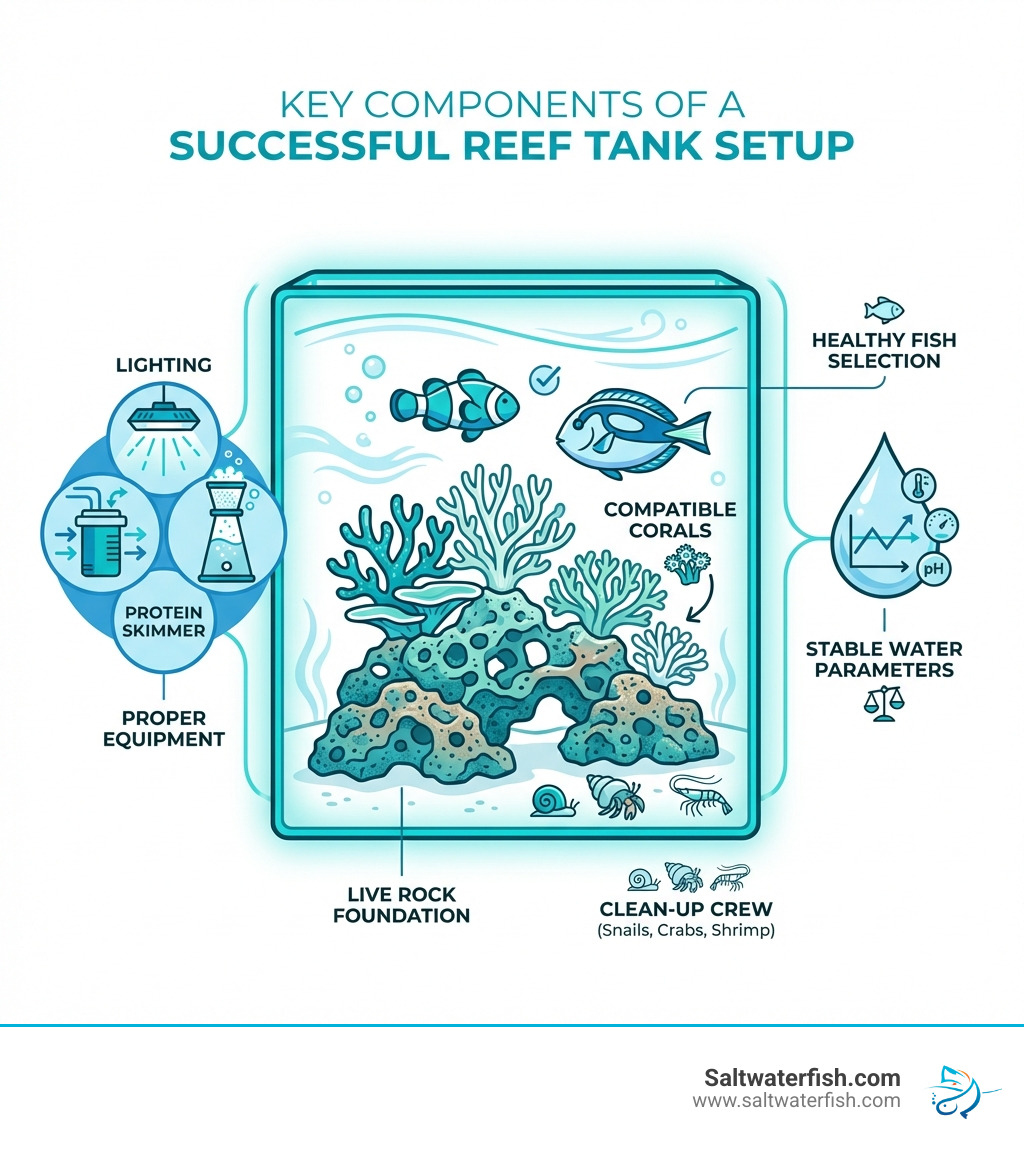
A truly successful reef aquarium is more than just a collection of beautiful fish; it's a carefully balanced, miniature marine ecosystem. When sourcing reef tank fish for sale, they are just one component of a thriving, self-sustaining environment. A balanced aquarium relies on natural filtration, biodiversity, and the harmonious interaction of all its inhabitants, from the smallest snail to the largest tang. Live rock and coral play crucial roles in this balance, providing both biological filtration and essential habitat. Find The Top Benefits of Adding Coral and Live Rock to Your Saltwater Aquarium.
The Importance of a 'Clean-Up Crew'
No reef tank, no matter how carefully maintained, can truly thrive without a dedicated "clean-up crew" (CUC). These unsung heroes of the marine aquarium tirelessly work to keep your tank pristine, controlling algae, consuming detritus, and generally maintaining a healthy environment.
- Snails: Herbivorous snails like the Mexican Turbo Snail are indispensable algae grazers, keeping your glass, rocks, and substrate clean.
- Hermit Crabs: Species such as the Scarlet Hermit Crab are omnivores that scour the tank for uneaten food and detritus, and some even consume nuisance algae.
- Shrimp: Peppermint Shrimp are famous for their ability to consume Aiptasia anemones, while cleaner shrimp help keep fish free of parasites.
A diverse clean-up crew is essential for detritus removal and algae control, acting as a natural maintenance team for your reef. We offer comprehensive solutions like the Reef Cleaner Pack Deluxe to get your ecosystem off to a great start. To learn more, check out What is a Cleanup Crew in a Saltwater Aquarium?.
A Touch of Coral
Adding corals transforms a fish-only tank into a vibrant, dynamic reef. Corals provide shelter for your reef tank fish for sale and contribute significantly to the overall aesthetic and ecological balance of your aquarium. Corals have varying care needs, primarily related to lighting and water flow.
- Soft Corals: Generally the easiest to care for, soft corals like the Devils Hand Leather Coral Mini are forgiving of water parameters and thrive under moderate lighting and flow. They add graceful movement and color.
- LPS (Large Polyp Stony) Corals: These corals, such as the beautiful Hammer Coral Wall Gold, have larger, fleshy polyps and typically require moderate lighting and flow. They are a popular choice for their stunning appearance and relatively manageable care.
- SPS (Small Polyp Stony) Corals: SPS corals, including species like Acropora GH Aqua Delight, are considered advanced and demand pristine water quality, strong lighting, and vigorous water flow. They are known for their intricate structures and vibrant colors.
For beginners, starting with soft corals or hardy LPS corals is often recommended. As your experience grows, you can gradually introduce more demanding SPS varieties, always ensuring your tank's lighting and flow can meet their specific needs.
The Smart Way to Buy Online
In today's interconnected world, buying reef tank fish for sale online has become a convenient and often superior option. It offers a wider selection than most local fish stores and allows you to find specialized, rare, or captive-bred specimens that might otherwise be unavailable. However, choosing a reputable online retailer is crucial to ensure you receive healthy, high-quality marine life.
Where to Find Healthy Reef Tank Fish for Sale Online
When it comes to purchasing reef tank fish for sale online, you want a retailer that prioritizes the health and well-being of their livestock as much as you do. Here's what to look for and what we offer:
- WYSIWYG (What You See Is What You Get): This is a game-changer, especially for unique or designer fish and corals. WYSIWYG means the exact specimen you see pictured online is the one you will receive. This eliminates surprises and ensures you're getting precisely what you paid for. We offer many WYSIWYG options for our premium corals and fish.
- Hand-Picked Specimens: Our expert team hand-picks every fish, ensuring only the healthiest and most vibrant specimens are shipped to your door. Our commitment to quality means you're getting the best.
- Healthy Delivery Guarantees: A reputable online seller will stand behind their livestock. We offer an industry-leading 8-day+ money-back guarantee on healthy delivery, providing you with peace of mind. Our Returns Guarantee outlines our commitment to your satisfaction.
- Shipping Policies: Clear and reliable shipping is essential for live animals. We provide free shipping on qualifying marine life orders over $249 within the continental U.S., ensuring your precious cargo arrives safely and quickly.
- Pure Water Shipping: To reduce stress and minimize the risk of contamination during transit, our fish are shipped in pure water (water that has never housed marine life before). This helps ensure cleaner shipping conditions, better oxygen stability, and a healthier arrival for your fish.
- Typical Price Range: The price for reef tank fish for sale can vary widely based on species, rarity, size, and whether it's captive-bred or wild-caught. You might find common clownfish for $10-$25, while rare tangs or angelfish could range from $150-$500 or even more. Our diverse selection caters to all budgets and desires.
With over 5,000 5-star reviews, our customers consistently praise our selection, health, and service. You can SEE ALL REVIEWS and find why we are a trusted source for marine life.
Frequently Asked Questions about Reef Tank Fish
We understand that keeping a reef tank can sometimes feel like a complex endeavor. Here are answers to some of the most common questions we receive about reef tank fish for sale and their care.
What are the most common diseases for reef fish and how can I prevent them?
The two most common and dreaded diseases in marine aquariums are:
- Marine Ich (Cryptocaryon irritans): A parasitic infection that appears as small white spots resembling grains of salt on the fish's body and fins.
- Marine Velvet (Amyloodinium ocellatum): A highly contagious and rapidly fatal dinoflagellate infection, often appearing as a dusty, yellowish-gold film on the fish.
Prevention is key:
- Quarantine: Always quarantine new fish in a separate tank for at least 3-4 weeks. This allows you to observe for signs of disease and treat them if necessary before introducing them to your main display tank.
- Stable Water Parameters: Maintaining consistent and ideal water conditions (temperature, salinity, pH, alkalinity) is crucial. Stress from fluctuating parameters weakens a fish's immune system. Follow our Easy Steps to Ensure Top-Notch Water Quality in Your Saltwater Aquarium.
- Proper Nutrition: A varied and nutritious diet boosts a fish's immune system, making them more resilient to pathogens.
- Avoid Overcrowding: Too many fish in a tank leads to stress and increased waste, both of which can lead to disease.
What essential equipment do I need for a reef tank?
Setting up a reef tank requires specialized equipment to maintain the delicate marine environment. Key components include:
- Aquarium: The tank itself, chosen based on the desired size and types of fish and corals.
- Sump/Refugium: A separate reservoir below the main tank that houses filtration equipment and often a refugium for beneficial macroalgae.
- Protein Skimmer: Essential for removing organic waste before it breaks down into nitrates and phosphates.
- Heater: To maintain a stable temperature, typically around 76-78°F.
- Lighting (LED): High-quality LED lights are crucial for coral growth and showcasing fish colors.
- Wavemakers/Powerheads: To create essential water flow and circulation within the display tank.
- RO/DI Unit: A Reverse Osmosis/Deionization unit is necessary to produce pure water free of contaminants for mixing saltwater and topping off evaporated water.
- Test Kits: To regularly monitor water parameters like salinity, pH, alkalinity, calcium, magnesium, nitrates, and phosphates.
While it might seem like a lot, with the right setup, maintaining a saltwater aquarium doesn't have to be overly difficult. Read our guide, Is a Saltwater Aquarium Hard to Maintain?, for more insights.
Where can I find reliable advice and support for my reef tank?
The marine aquarium hobby has a fantastic community eager to share knowledge and support.
- Online Forums: Our Saltwaterfish.com Forum contains a large archive of reef-keeping discussions and Q\&A from experienced hobbyists. While it’s not highly active today, it can still be a useful reference for researching common questions, equipment recommendations, and livestock care topics.
- Local Reef Clubs: Many cities and regions have local reef clubs. These groups often meet regularly, host guest speakers, organize frag swaps, and provide a great network for advice and support.
- Reputable Retailer Blogs: Blogs from established retailers, like ours, provide expert advice, care guides, and product information. Our Coral Reef Fish Guide is a great place to start learning about different species.
Don't hesitate to tap into these resources. Learning from experienced hobbyists can save you time, money, and frustration.
Your Journey to a Thriving Underwater World
We hope this guide has illuminated the path to finding the perfect reef tank fish for sale and building a vibrant marine aquarium. From understanding the nuances of captive-bred versus wild-caught fish to selecting compatible tank mates and ensuring proper care, every step contributes to the beauty and longevity of your underwater world.
The reward of a beautiful reef tank, teeming with healthy, colorful fish and corals, is truly immeasurable. It's a living piece of art that brings tranquility and wonder into your home. With our 25+ years of experience and unwavering commitment to quality and customer satisfaction, we at Saltwaterfish.com are dedicated to helping you achieve your reefing dreams.
Start your reefing journey with confidence, knowing you have a trusted partner every step of the way. For beginners, our Essential Guide to Saltwater Aquarium for Beginners is an invaluable resource. Dive in, and let us help you create something truly spectacular!