The Ultimate Guide to Gem Tang
Striking, rare, and highly sought after, the Gem Tang is one of the most stunning fish in the saltwater aquarium hobby. Learn why this dazzling algae grazer is becoming a prized centerpiece for serious reef aquarists.


The Gem Tang: One of the Ocean's Most Coveted Reef Fish
The gem tang (Zebrasoma gemmatum) is one of the most striking and sought-after fish in the saltwater aquarium hobby. Here's a quick overview:
| Feature | Details |
|---|---|
| Scientific Name | Zebrasoma gemmatum |
| Common Names | Gem Tang, Jewelled Tang, Spotted Tang, Mauritian Tang |
| Max Size | Up to 9 inches (22-23 cm) |
| Minimum Tank Size | 180 gallons |
| Temperament | Semi-aggressive |
| Diet | Herbivore (algae-based) |
| Reef Safe | Yes |
| Water Temp | 72-82°F |
| pH | 8.1-8.4 |
| Price Range | $300-$3,000 |
| Care Level | Moderate |
| Origin | Western Indian Ocean |
| IUCN Status | Data Deficient |
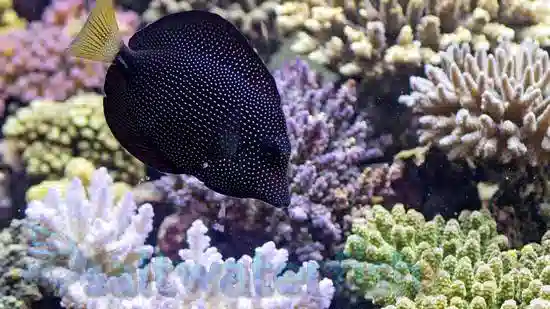
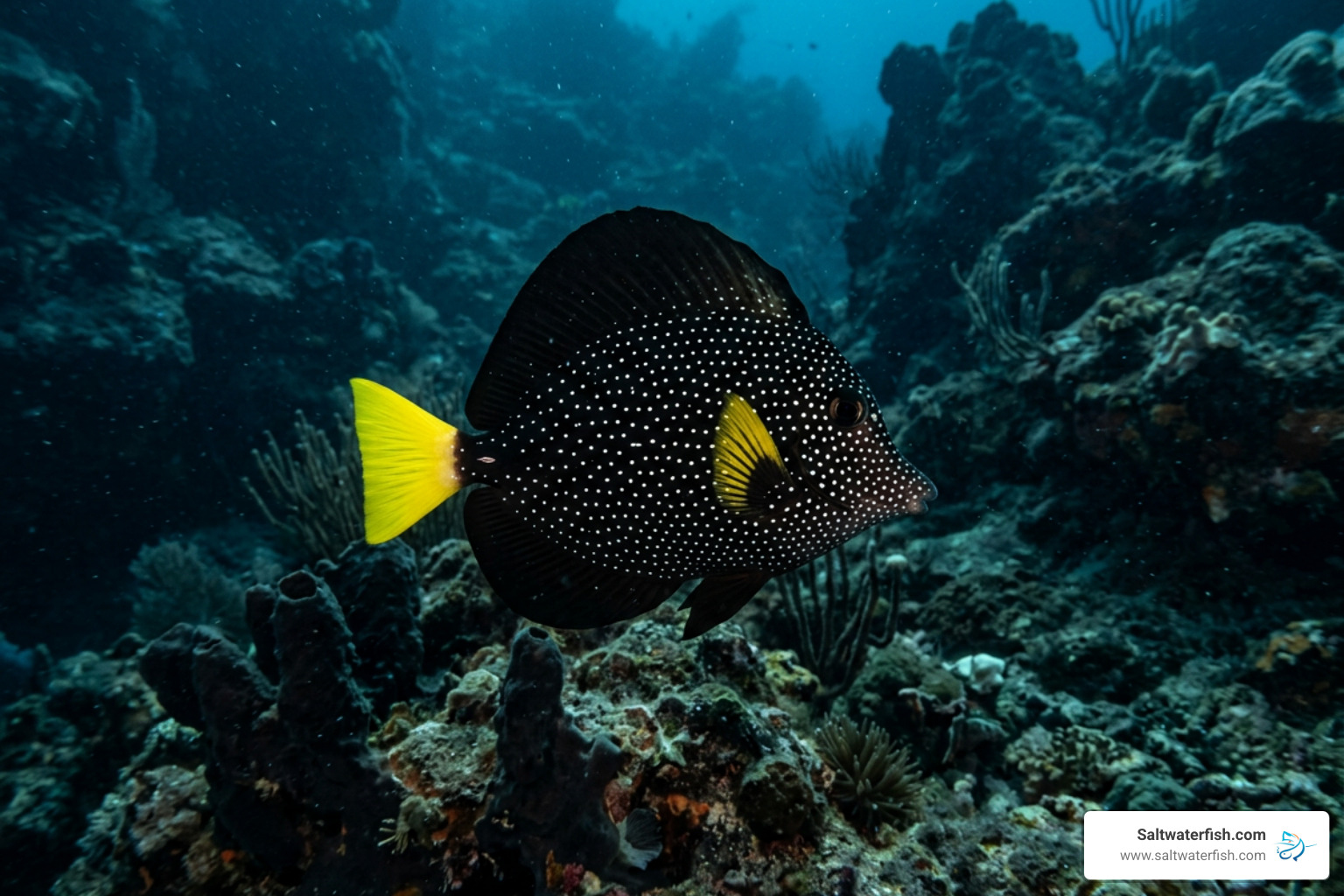
Imagine a fish so dark it looks like a piece of the night sky — jet black, covered in brilliant white spots, with a vivid yellow tail that catches every beam of light. That's the gem tang. It's rare, it's expensive, and for serious reef keepers, it's the ultimate centerpiece fish.
What makes it so special? Part beauty, part mystery. Gem tangs live in deep, turbulent waters off the coasts of Mauritius, Madagascar, and Mozambique — places that are difficult to reach and even harder to collect from responsibly. That combination of stunning looks and genuine scarcity drives prices anywhere from $300 to $3,000 per fish.
Despite the price tag, the gem tang isn't impossibly difficult to keep. With the right tank setup, a proper diet, some thought around compatibility, it can thrive in a home reef aquarium for many years.
I'm Scott Hughes, founder of SaltwaterFish.com and a lifelong marine aquarium hobbyist with years of hands-on experience sourcing, handling, and caring for rare fish like the gem tang. In the guide below, I'll walk you through everything you need to know to keep one successfully.
Biology and Natural Habitat of the Gem Tang
The gem tang, scientifically known as Zebrasoma gemmatum, is a member of the Acanthuridae family, which includes surgeonfishes, tangs, and unicornfish. Within the scientific classification of the genus Zebrasoma, the gem tang occupies a unique phylogenetic position. It is often described as a monospecific clade, sitting distinctly between other well-known species like the Yellow Tang (Z. flavescens) and the Sailfin Tang (Z. veliferum).
In the wild, these fish are endemic to the Western Indian Ocean. Their primary range includes the waters surrounding Mauritius and Madagascar, extending to the coasts of Mozambique and Natal, South Africa. Unlike many common reef fish that flit about in shallow lagoons, the gem tang is a deep-water specialist. While juveniles may occasionally be spotted in shallower, sheltered areas, adults typically inhabit depths between 25 and 60 meters (approximately 82 to 200 feet).
This preference for deep, often high-surge environments is one of the primary reasons they remain so rare in the hobby. Collecting a fish at 150 feet is a technical challenge that requires specialized diving equipment and decompression protocols.
According to the IUCN Red List Status, the gem tang is currently listed as "Data Deficient." This means we don't have enough scientific information to accurately determine its total population size or the full impact of the aquarium trade on its numbers. However, we do know that they are naturally solitary and highly territorial. In their native habitat, they are rarely seen in groups, instead patrolling a specific patch of reef alone to graze on algae.
Optimal Tank Setup for a Gem Tang
When we bring a gem tang into our homes, we must respect its need for space and oxygen. While some older resources suggest a 125-gallon tank, we strongly recommend a minimum of 180 gallons for a long-term home. These fish are active, powerful swimmers that can reach up to 9 inches in length. A six-foot-long tank is the gold standard, providing the horizontal "runway" they need to burn off energy.
Because they come from surge zones, high water flow is essential. We recommend using powerful wavemakers to ensure the water is highly oxygenated. Your aquascape should include plenty of live rock, which serves two purposes:
- Grazing Surfaces: It provides a place for natural filamentous and benthic algae to grow.
- Hiding Spots: Despite their semi-aggressive nature, gem tangs can be shy when first introduced and need secure caves where they can retreat to feel safe.
Physical Characteristics and Identification
The most iconic feature of the gem tang is its "galaxy" of white spots. Set against a jet-black or extremely dark brown body, these iridescent spots create a high-contrast look that is unmatched by any other surgeonfish. Their tail (caudal fin) and pectoral fins often feature vibrant yellow accents, though the intensity can vary between individuals.
Like all members of the Zebrasoma genus, they have a high, sail-like dorsal fin and a pointed snout perfect for picking algae out of tight crevices. They are also equipped with a "scalpel"—a sharp, white spine located on the caudal peduncle (the base of the tail). This spine is used for defense and to establish dominance. When handling or netting a gem tang, we must be extremely careful, as this spine can easily tangle in nets or cause a painful "sting" to an unwary aquarist.
Aquarium Care and Water Parameters
Stability is the name of the game when caring for high-end tangs. Because the gem tang comes from deeper, more stable environments, they do not handle rapid swings in water chemistry well. We recommend utilizing a high-quality protein skimmer and regular water changes to keep nitrates and phosphates low.
| Parameter | Ideal Range |
|---|---|
| pH | 8.1 – 8.4 |
| Temperature | 74°F – 82°F |
| Specific Gravity | 1.021 – 1.025 |
| Carbonate Hardness (dKH) | 8 – 12 |
| Ammonia/Nitrite | 0 ppm |
| Nitrate | < 20 ppm |
A healthy gem tang is an active gem tang. You should see yours constantly picking at the rockwork throughout the day. If the fish becomes lethargic or stops grazing, it is often a sign of stress or deteriorating water quality.
Diet and Feeding Practices in Captivity
In the wild, the gem tang is a dedicated herbivore, spending its days consuming various types of filamentous and benthic algae. In the home aquarium, providing a varied, algae-heavy diet is the single best way to ensure your fish stays healthy and vibrant.
While they are primarily wild-collected, there has been exciting more info about aquacultured breakthroughs in recent years. Whether your fish is wild-caught or captive-bred, its nutritional needs remain the same. We recommend a "base" diet of high-quality marine seaweed (Nori).
We find that feeding Nori at least three times a week—or even daily—is essential. You can use a veggie clip or rubber-band the seaweed to a rock to simulate natural grazing. In addition to greens, supplement their diet with:
- Spirulina-enriched flakes or pellets.
- Mysis shrimp or artemia (to provide necessary proteins).
- Vitamin-enriched foods (soaking pellets in a vitamin supplement helps boost their immune system).
Feeding Your Gem Tang for Maximum Color
To keep those white spots "popping" against the black body, internal health is key. A fish that isn't getting enough vitamins will often look "washed out" or brownish rather than deep black. We suggest using algae clips to keep food available for longer periods, as tangs have a high metabolism and prefer to eat small amounts throughout the day rather than one large meal. Herbivore-specific pellets containing color enhancers can also help maintain that "collector quality" look.
Temperament, Compatibility, and Reef Safety
The gem tang is generally classified as semi-aggressive. Like most tangs, they are peaceful toward non-tang tank mates but can become quite territorial toward fish with a similar shape or color. They are particularly aggressive toward other members of the Zebrasoma genus (like Yellow, Purple, or Sailfin Tangs).
Are they reef-safe? Absolutely. They are excellent "janitors" for a reef tank because they constantly eat nuisance algae that might otherwise smother corals. However, if a gem tang is underfed, it may occasionally nip at large polyp stony (LPS) corals or clam mantles out of hunger. Keeping them well-fed with Nori usually prevents this behavior entirely.
Choosing Compatible Tank Mates for a Gem Tang
When selecting neighbors for your gem tang, look for fish that occupy different niches in the aquarium. Good choices include:
- Wrasses and Anthias: These active swimmers stay out of the tang's way.
- Blennies and Gobies: Bottom-dwellers that won't compete for the same swimming space.
- Clownfish: Generally ignored by tangs.
Introduction Strategies: If you plan on keeping multiple tangs in a very large system (250+ gallons), we recommend introducing them all at once. This prevents a single fish from establishing a "territory" and bullying newcomers. If adding a gem tang to an existing tank, using a social acclimation box for a few days can help the resident fish get used to the newcomer without physical contact.
Why is the Gem Tang So Rare and Expensive?
It is the question every visitor asks: "Why does that fish cost as much as a used car?" The high price of the gem tang is a result of several factors:
- Deep-Water Collection: As mentioned, these fish live at depths that require specialized diving.
- Surge Zones: They prefer areas with heavy wave action, making it dangerous for divers to navigate the rocks to catch them.
- Limited Range: They aren't found across the entire ocean; they are concentrated in a small pocket of the Western Indian Ocean.
- Shipping Logistics: Transporting a fish from South Africa or Mauritius to the United States is a long, expensive journey that requires expert handling to ensure the fish arrives healthy.
While the price has stabilized somewhat due to the captive-bred Gem Tang availability and more consistent importing, it remains a "collector's fish." For many, the gem tang is an investment—a centerpiece that defines the entire aquarium.
Frequently Asked Questions about Gem Tangs
How big do Gem Tangs get in the home aquarium?
In a large enough tank (180+ gallons), a gem tang can reach a maximum size of about 9 inches. However, most individuals in the hobby stay in the 6-to-8-inch range. Their growth rate is moderate, so buying a "medium" 3-4 inch specimen gives you plenty of time to enjoy their development.
Are Gem Tangs difficult to acclimate?
Actually, once they survive the initial transit from the ocean, gem tangs are surprisingly hardy. They adapt to aquarium life just as well as the more common Purple Tang. We recommend a slow drip acclimation over 1-2 hours and, if possible, a stay in a quarantine tank to ensure they are eating well before facing the competition of a display tank.
Is the Gem Tang truly reef-safe?
Yes, they are 100% reef-safe in terms of not eating corals as a primary food source. They are actually beneficial for reefs because they graze on algae that can harm coral growth. Just ensure they are getting enough greens so they don't get "curious" about your LPS corals.
Conclusion
The gem tang is more than just a fish; it is a testament to the beauty and diversity of our oceans. While its rarity and price tag make it a serious commitment, the reward is a stunning, intelligent, and active centerpiece that will be the envy of every hobbyist who sees your tank.
At Saltwaterfish.com, we draw on 26 years of experience to source the healthiest specimens from around the globe. We understand the importance of expert husbandry and are here to support you in making this "jewel of the ocean" the star of your reef.
If you are ready to take the leap and add this incredible animal to your collection, you can Shop Gem Tangs directly through our real-time inventory. Whether you are looking for a wild-caught beauty or an aquacultured specimen, we are dedicated to helping you succeed in this rewarding hobby.