Setting Up Your First Saltwater Fish Tank
Why Starting a Saltwater Fish Tank is Worth the Journey


Why Starting a Saltwater Fish Tank is Worth the Journey
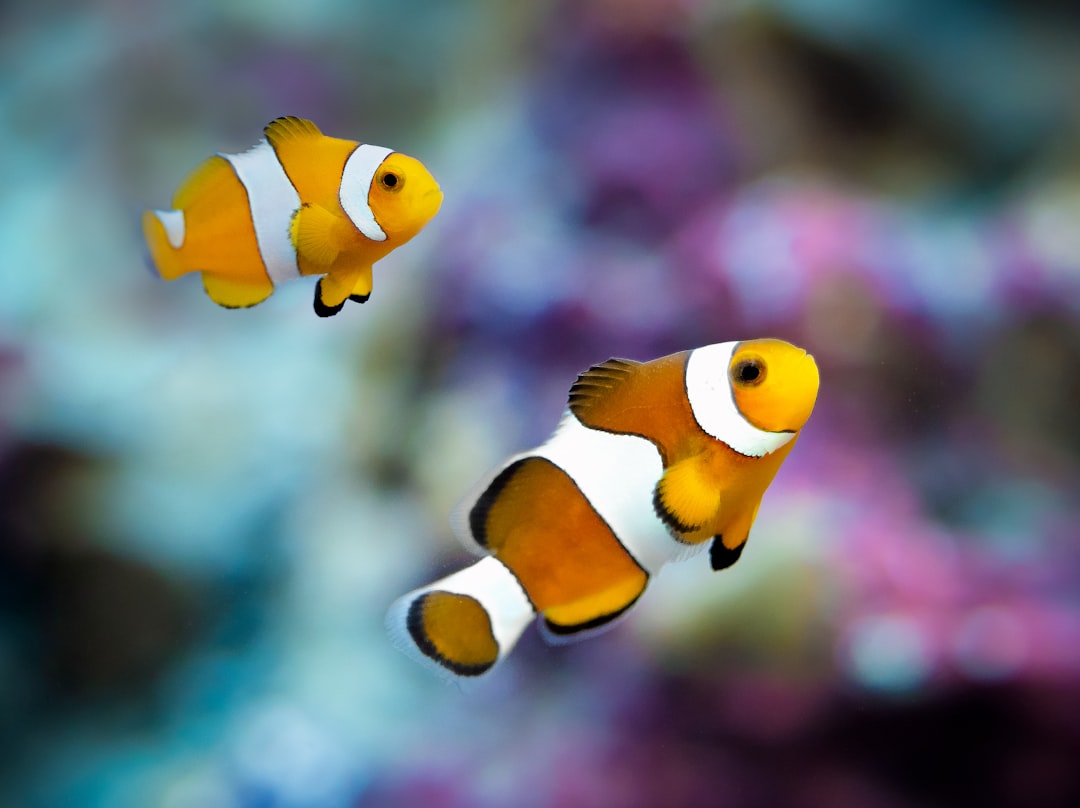
A saltwater fish tank is a captivating home ecosystem that brings the vibrant colors and fascinating behavior of marine life into your living space. While it requires more planning than a freshwater setup, the reward of watching corals grow, fish thrive, and a complete underwater world come to life makes it one of the most fulfilling hobbies you can pursue.
Quick Answer: What You Need to Know About Saltwater Fish Tanks
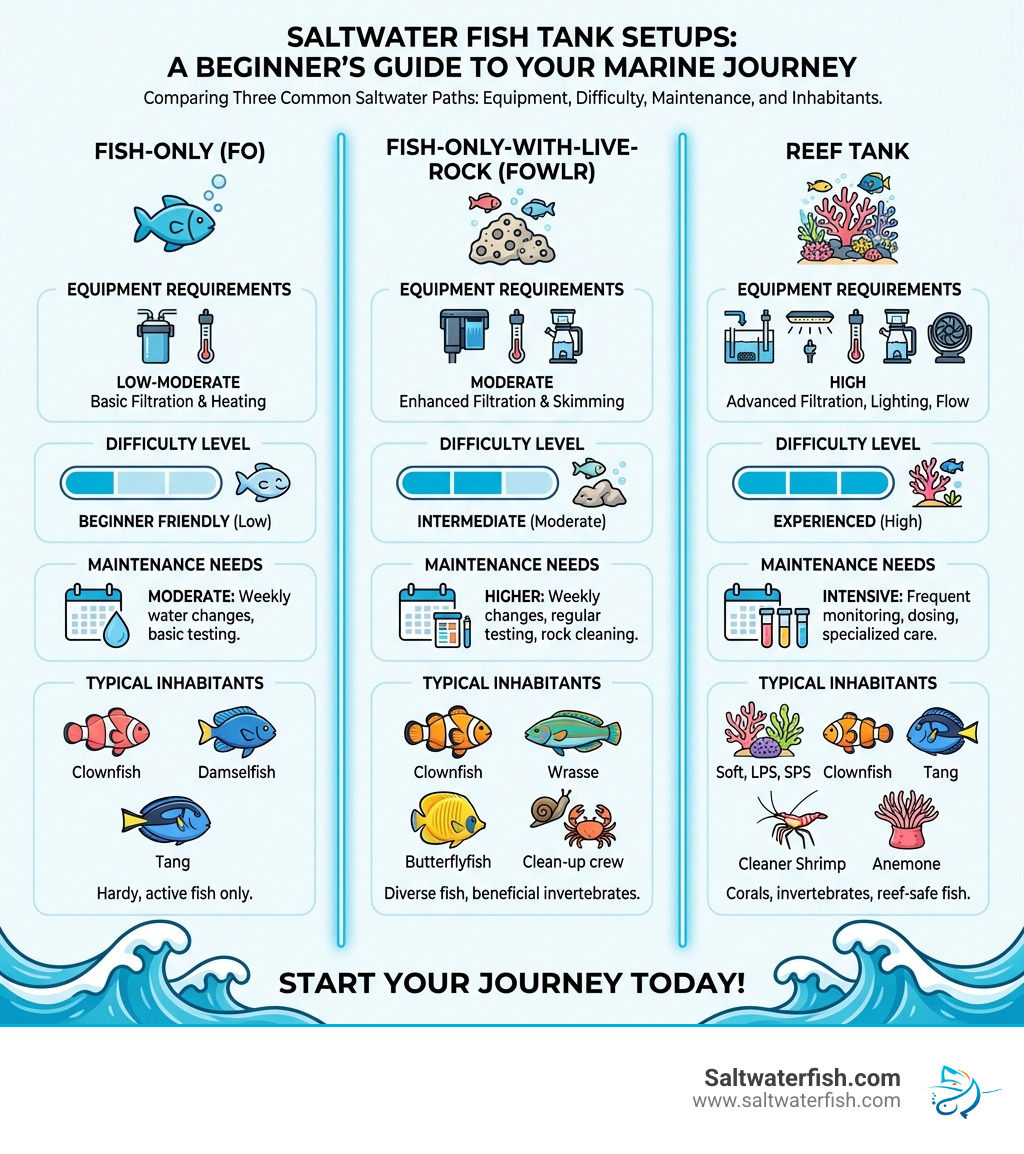
- Three Main Types: Fish-Only (FO), Fish-Only-With-Live-Rock (FOWLR), and Reef Tank setups
- Initial Investment: Ranges from $500-$2,000+ depending on size and type
- Setup Time: 4-6 weeks to cycle before adding fish
- Key Equipment: Tank, filtration, heater, lighting, live rock, protein skimmer, and test kits
- Ongoing Care: Weekly water changes, regular testing, and daily observation
- Best Starter Size: 40-75 gallons (larger tanks are more stable)
The journey from empty glass box to thriving marine ecosystem takes patience and careful planning. You'll learn about water chemistry, the nitrogen cycle, and the delicate balance that keeps fish and corals healthy. Each step—from choosing your tank type to selecting your first fish—builds toward creating a stunning piece of living art.
This guide walks you through every stage of setting up your first saltwater aquarium. We'll cover choosing between fish-only and reef setups, assembling essential equipment, cycling your tank properly, and establishing a maintenance routine that ensures long-term success. You'll also learn how to avoid the common mistakes that trip up many beginners in their first year.
I'm Scott Hughes, founder of Deep Blue Seas and Saltwaterfish.com, where we've helped thousands of hobbyists succeed with their first saltwater fish tank over the past 26 years. Our focus on livestock quality and ethical sourcing means you get healthy specimens that thrive in your carefully prepared system.
Choosing Your Path: Types of Saltwater Aquariums
Starting on the saltwater aquarium hobby is an exciting adventure, and one of the first decisions you'll make is what type of saltwater fish tank setup you want. Our experience has shown that bigger tanks generally give you more room for error when it comes to water quality. A larger volume of water provides greater stability, making it easier to maintain consistent parameters—a crucial factor for marine life. This is why we often recommend getting the biggest tank you can accommodate and afford.
Before diving into equipment, it’s wise to think about the inhabitants you eventually want. This helps you plan your tank size, filtration, and lighting from the start, saving you time and money in the long run. Whether you're considering a brand-new tank or a used one, weigh the pros and cons; new tanks come with warranties, while used tanks might offer cost savings but carry risks like compromised silicone seals or scratches, especially with acrylic.
Deciding on Tank Size and Placement
The size and placement of your saltwater fish tank are critical considerations. Saltwater is dense, and a 10-gallon tank's water alone will weigh close to 84 lbs. When you add substrate, rock, and equipment, even a small tank can become surprisingly heavy. A good rule of thumb is that water weighs about 8.4 pounds per gallon, so a 10-gallon nano tank, once fully equipped, can easily weigh over 80 pounds. For larger tanks, you'll need to ensure your floor can support the weight, potentially requiring reinforcement.
Location is also key. Choose a spot that allows ample access for maintenance—you'll need space behind the tank for wires and equipment, and enough room to work inside. We recommend leaving 2-3 inches behind the aquarium for wires. Avoid direct sunlight, as this can lead to excessive algae growth and temperature fluctuations. Similarly, placing your tank near air vents can cause temperature instability.
To help you get started, explore our wide selection of tanks and aquarium kits that cater to every level of hobbyist: Explore tanks and aquarium kits at Saltwaterfish.com
The Fish-Only (FO) Setup
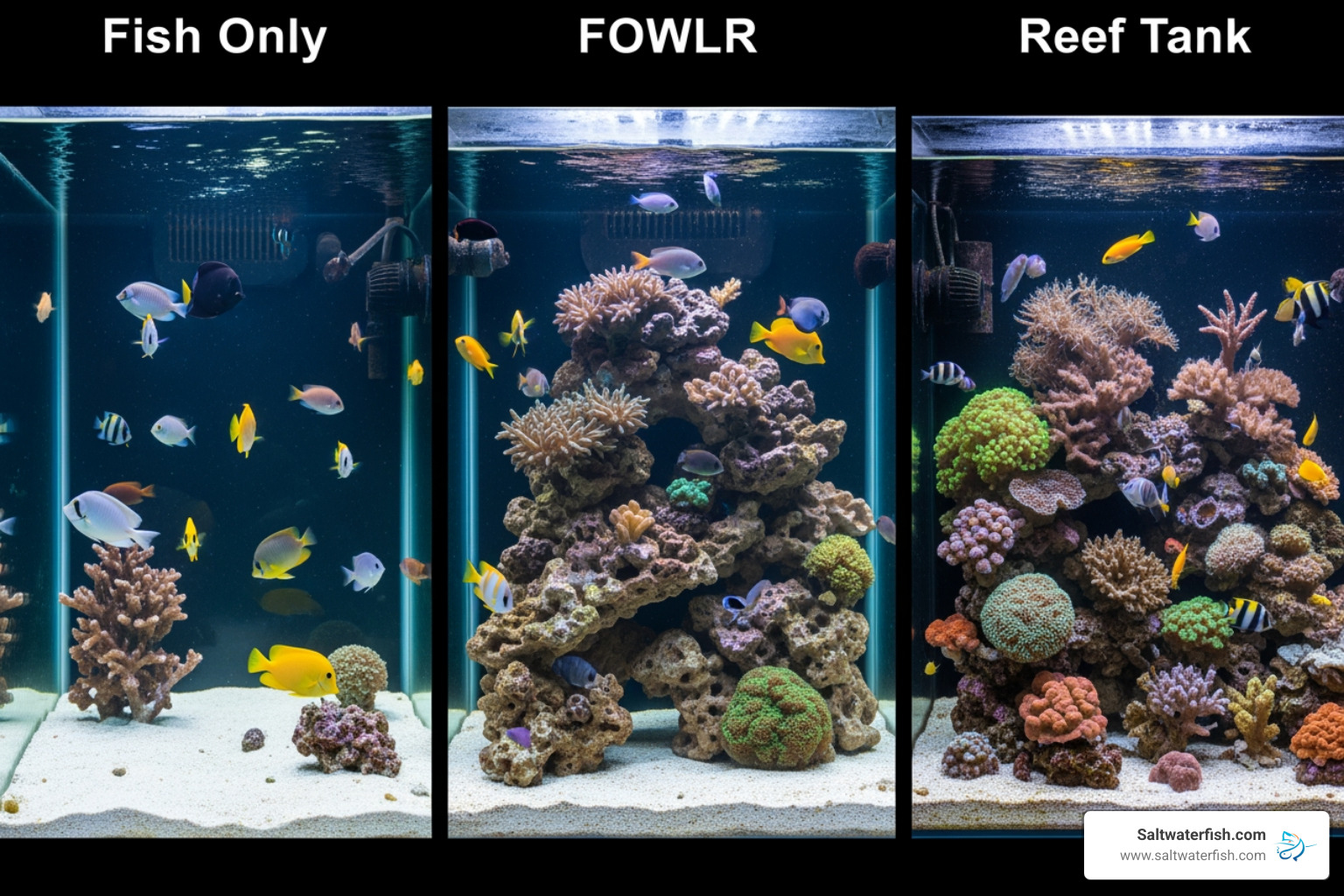
The Fish-Only (FO) setup is often perceived as the simplest and least expensive entry point into the saltwater hobby. While it does have a lower initial cost for equipment, our experience suggests it's not necessarily the easiest to get started with. Without the biological filtration provided by live rock, these tanks often require more frequent maintenance to manage waste products. They can also have a longer cycling time as beneficial bacteria need to establish themselves without the aid of live rock. The primary focus of an FO tank is showcasing a variety of beautiful marine fish.
Advantages:
- Lower initial equipment cost.
- Less demanding lighting requirements.
- More flexibility with fish choices (though compatibility is still key).
Disadvantages:
- Requires more frequent water changes and manual nitrate removal.
- Can be less stable than FOWLR or reef tanks due to reduced biological filtration.
- Longer initial cycling period.
The Fish-Only-With-Live-Rock (FOWLR) Setup
For many beginners, the Fish-Only-With-Live-Rock (FOWLR) setup is the sweet spot. It offers a beautiful display of marine fish while leveraging the incredible benefits of live rock. Live rock provides excellent natural biological filtration, housing millions of beneficial bacteria that process toxic ammonia and nitrite into less harmful nitrates. This significantly aids in maintaining stability in the aquarium and reduces the frequency of major water changes compared to an FO tank.
Aquascaping with live rock allows you to create stunning underwater landscapes with caves and hiding spots for your fish. We recommend approximately 1 to 1.5 lbs of cured live rock per gallon for a healthy FOWLR setup. Beyond fish, you can also introduce a clean-up crew of invertebrates like snails and hermit crabs, which help control algae and detritus. Many hobbyists find starting with a FOWLR tank is a great way to learn the ropes and see if they truly enjoy the hobby before making the larger investment required for a full reef tank. It's often said that if you like the hobby, you will likely turn your FOWLR into a full-blown reef eventually!
The Reef Tank Challenge
The reef tank is often considered the ultimate goal for many saltwater aquarists, offering a mesmerizing display of corals, anemones, and other invertebrates, with fish often playing a secondary role. However, it's also the most demanding type of saltwater fish tank. Reef tanks require excellent water conditions, extremely high lighting levels, water supplements (like iodine, calcium, strontium, and magnesium), and excellent filtration.
The specific requirements and challenges include:
- Strict Water Quality: Corals are very sensitive to water parameters. You'll need to carefully monitor and maintain alkalinity, calcium, magnesium, and phosphate levels, in addition to the basic parameters.
- High Lighting: Corals have specific lighting needs, often requiring high PAR (Photosynthetically Active Radiation) levels. Specialized LED, T5, or metal halide fixtures are common.
- Advanced Equipment: Beyond the basics, reef tanks often use protein skimmers, sumps, refugiums, and sometimes even dosing pumps for supplements.
- Patience and Knowledge: If you are just getting started with saltwater, we usually recommend leaving the reef tank for a future time when you have more experience under your belt.
While challenging, the reward of seeing a thriving coral reef in your home is unparalleled. When you're ready to take the plunge, you can find inspiration and ideas in our community gallery: See inspiring reef tank setups in our community gallery
Your Saltwater Fish Tank Starter Kit: Essential Equipment & Setup
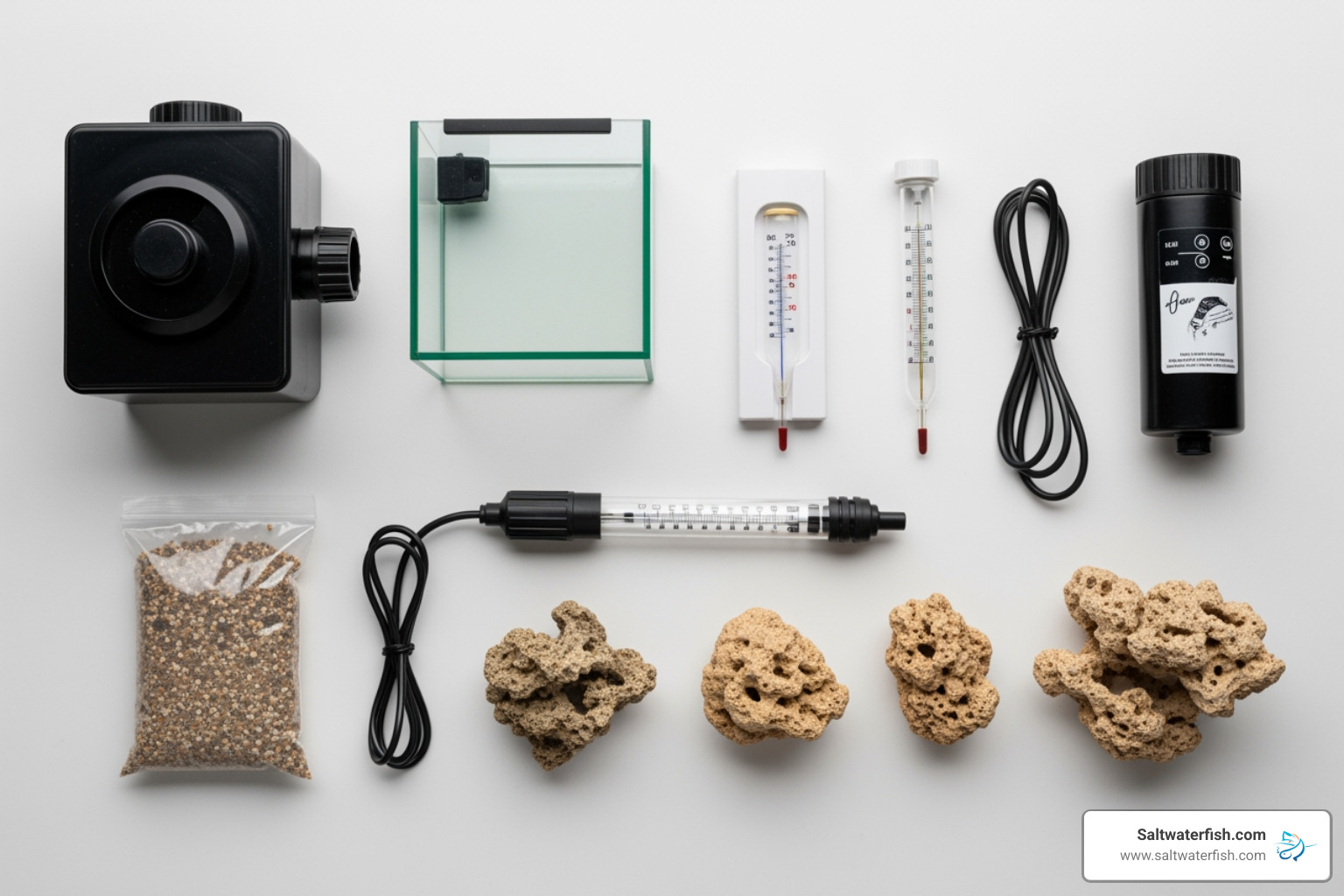
Setting up your first saltwater fish tank involves more than just buying a tank. It's about assembling a comprehensive life support system. Quality gear is a worthwhile investment, and planning for emergencies, like power outages or equipment failure, is crucial. The key to a stable, healthy, and flourishing saltwater aquarium is consistent water parameters, which reliable equipment helps you achieve.
Filtration and Water Flow
Filtration is the cornerstone of a healthy marine environment. In FOWLR and reef setups, live rock serves as the primary biological filtration, providing immense surface area for beneficial bacteria to thrive and process waste. Beyond live rock, other essential components include:
- Protein Skimmers: These are considered mandatory by many experienced hobbyists. Protein skimmers remove organic waste before it breaks down into harmful nitrates, creating a healthier environment. They work by generating tiny bubbles that collect proteins and other organic compounds, which are then deposited into a collection cup.
- Sumps and Filter Socks: Sumps are separate containers, typically placed below the main display tank, that house filtration equipment like protein skimmers, heaters, and sometimes refugiums. Filter socks, usually placed in the first chamber of a sump, are fine mesh bags that mechanically filter out debris, sand, and other particulate matter, preventing them from recirculating in the tank.
- Canister Filters: While common in freshwater, canister filters for saltwater need careful maintenance. They can become nitrate factories if not cleaned regularly, as trapped debris breaks down.
- Powerheads for Water Movement: Marine environments are dynamic, and strong water flow is essential for fish health and, especially, coral growth. Powerheads circulate water, prevent dead spots, and deliver food and nutrients to corals. Adjustable powerheads are particularly useful for reef tanks, allowing you to customize flow patterns.
- UV Sterilizers: While not strictly mandatory for all setups, many hobbyists, including us, recommend UV sterilizers. They help reduce free-floating algae, bacteria, and parasites in the water column, contributing to clearer water and healthier fish. Shop UV Sterilizers at Saltwaterfish.com
Lighting, Heating, and Water Purity
These elements are vital for replicating a natural marine environment.
- Lighting's Role: Lighting provides two main functions: it illuminates the aquarium for aesthetic enjoyment and, crucially, provides the functional light needed to support photosynthetic life like corals and anemones. For reef tanks, high PAR (Photosynthetically Active Radiation) levels are essential for coral growth and coloration. If you're serious about corals, a PAR meter is crucial for understanding your light's exact output.
- Heaters and Temperature Controllers: Marine fish thrive in stable water temperatures, ideally between 76-78ºF. A heater (approximately 3 to 5 watts per aquarium gallon) is necessary to maintain this range. We strongly recommend using two heaters connected to a reliable temperature controller. If one heater fails, the backup kicks in, preventing a catastrophic temperature drop. This small investment can save your entire tank.
- RODI Water for Mixing Salt: Tap water is generally unsuitable for saltwater aquariums. It can contain chlorine, chloramine, heavy metals, phosphates, nitrates, and other contaminants that are harmful to marine life and can fuel nuisance algae growth. Reverse Osmosis De-Ionized (RODI) water is purified water, free of these impurities, making it the best choice for mixing your saltwater. Find RODI Filters and water conditioners at Saltwaterfish.com
Substrate, Rock, and Saltwater Mixing
These components form the foundation of your saltwater fish tank.
- Substrate, Rock, and Aquascaping: For substrate, a 1- to 2-inch layer of fine-grained aragonite sand, using roughly one to two pounds of substrate per gallon, is ideal. It provides a home for beneficial bacteria and micro-organisms. When aquascaping with live rock, always place the rock directly on the bottom glass of the tank, not on the sand. This prevents rock slides that could injure inhabitants or crack the tank. A good rule of thumb is to use 1 to 1.5 lbs of cured live rock per gallon, creating stable structures with plenty of caves and hiding spots. While live rock is excellent, dry rock or man-made rock is a great alternative, especially for beginners or those seeking sustainable options, as it can be seeded with beneficial bacteria over time.
- Saltwater Mixing: Mixing your saltwater correctly is crucial. Always use RODI water and a quality marine salt mix. Follow the manufacturer's instructions, but generally, you'll need about a half-cup of salt per gallon to achieve a salinity of 1.020-1.026. Mix the salt in a separate, food-safe container using a powerhead or pump to ensure it dissolves completely. We recommend letting it mix overnight and matching the temperature to your display tank before use.
- Salinity Measurement: A refractometer is the most accurate tool for measuring salinity. Aim for a specific gravity (SG) of 1.025-1.026, which mimics natural ocean conditions.
Bringing Your Aquarium to Life: The Nitrogen Cycle & Stocking
Once your equipment is set up and your saltwater fish tank is filled, the waiting game begins. Patience is key during this phase, as establishing a stable environment before adding life is paramount to long-term success.
Understanding and Mastering the Nitrogen Cycle
The nitrogen cycle is the biological process that converts toxic waste products into less harmful substances. It's the backbone of a healthy aquarium and must be established before you introduce any inhabitants.
- Ammonia (NH3): Fish waste, uneaten food, and decaying organic matter release ammonia, which is highly toxic to marine life.
- Nitrite (NO2): Beneficial bacteria (Nitrosomonas) convert ammonia into nitrite, which is also very toxic.
- Nitrate (NO3): Another group of beneficial bacteria (Nitrobacter) converts nitrite into nitrate. Nitrate is much less toxic but can still be harmful in high concentrations, especially to corals.
To initiate this cycle, you need to "seed" your tank with nitrifying bacteria. This can be done by adding a commercial bacterial additive (like Fluval Cycle or Biological Improver), or by using cured live rock, which comes pre-loaded with these bacteria. You can also add a small source of ammonia, such as a piece of raw cocktail shrimp, to kickstart the process.
During this cycling period, you'll need to regularly test your water parameters. You'll observe ammonia and nitrite levels rise, then fall to zero. The cycle is complete when both ammonia and nitrite consistently read 0 ppm, and nitrate levels are present but remain below 20 ppm. This process typically takes 4-6 weeks, but it's crucial not to rush it.
Acclimating and Selecting Your First Inhabitants
Once your saltwater fish tank is fully cycled and stable, you can begin to introduce inhabitants. Proper acclimation is vital to minimize stress and prevent shock to your new fish. We recommend the drip acclimation method:
- Float the sealed bag containing your new fish in your sump or tank for 15-20 minutes to equalize the water temperature.
- Open the bag and secure it to the side of your tank or a separate container.
- Using airline tubing, create a slow drip of your tank water into the bag. Aim for about 1-2 drips per second.
- Once the volume of water in the bag has doubled, discard half of the water and continue the drip. Repeat this process for at least 30-60 minutes.
- Gently net the fish and introduce it to your display tank, discarding all the bag water (never add store water to your display tank!).
Always quarantine new arrivals in a separate tank for several weeks before introducing them to your main display. This helps prevent the introduction of diseases like ich, which can devastate an established tank.
For beginners, choosing hardy, peaceful fish is key. Start with a few fish and add them slowly (no more than one every 1-2 weeks) to allow your biological filter to adjust.
Here are 5 great beginner saltwater fish:
- Ocellaris or Percula Clownfish: Hardy, friendly, and iconic.
- Chromis: Small, active, and can add movement (though often best to keep one, as groups can dwindle).
- Blennies: Entertaining algae-eaters, like the Lawnmower Blenny.
- Cardinalfish: Peaceful, often schooling fish that adapt well to captivity.
- Gobies: Many varieties are great for beginners, like the Yellow Watchman Goby or Diamond Watchman Goby, which sift sand.
The Art of Maintenance: Ensuring Long-Term Success
Maintaining your saltwater fish tank is an ongoing commitment, but establishing a routine makes it manageable and enjoyable. The "solution to pollution is dilution"—meaning regular water changes are your best friend. Daily observation of your tank and its inhabitants will help you spot potential issues early.
Water Testing and Parameters for your saltwater fish tank
Regular water quality testing is non-negotiable for a healthy saltwater aquarium. It allows you to monitor the stability of your system and address issues before they become problems.
Key parameters to monitor include:
- Ammonia, Nitrite, Nitrate: Crucial during cycling and periodically thereafter to ensure your biological filter is functioning.
- pH: Marine systems typically have a pH of 8.1-8.2.
- Alkalinity, Calcium, Magnesium: Essential for coral growth and overall water stability, especially in FOWLR and reef tanks.
- Salinity: Always check with a refractometer, aiming for 1.025-1.026 SG.
For new tanks, we recommend testing ammonia and nitrite twice a week during cycling. Once cycled, test alkalinity, nitrate, and phosphate twice a week for at least the first six months, then monthly for established tanks. Shop Test Kits at Saltwaterfish.com
Water Changes and Feeding
Water changes are fundamental to maintaining a healthy saltwater fish tank. They remove accumulating nitrates and other dissolved organic compounds that your filtration system might miss, while also replenishing essential trace elements that marine life consumes. For beginners, a 20% weekly water change is highly recommended. This practice helps ensure stable water quality and provides a buffer against minor mistakes.
When it comes to feeding, best practices are simple:
- Frequency: Feed small amounts 2-3 times a day.
- Variety: Offer a varied diet including flake, pellet, and frozen foods.
- Frozen Foods: We strongly favor frozen foods over pellets, especially for beginners. Frozen foods are typically higher in protein, have fewer fillers, and pollute the tank less, making it harder to overfeed. Options like Hikari Mysis Shrimp are excellent.
- Avoid Overfeeding: Only feed what your fish can consume within a few minutes. Uneaten food decays, contributing to ammonia and nitrate spikes.
Explore our range of frozen foods and other nutrition options to keep your marine inhabitants healthy: Explore Frozen Foods and nutrition options
Avoiding Common Beginner Mistakes
The saltwater hobby can be challenging, but many pitfalls can be avoided with a bit of foresight. Based on our 26 years of experience, here are common mistakes and how to prevent them:
- Overstocking Too Quickly: Adding too many fish at once overwhelms your biological filter, leading to ammonia spikes. Introduce new fish slowly—no more than one every 1-2 weeks.
- Chasing Perfect Numbers: While parameters are important, obsessing over minute fluctuations and constantly adding chemicals can do more harm than good. Focus on stability and consistency.
- Lack of Quarantine: Introducing new fish or corals directly into your display tank without quarantining is a recipe for disaster, potentially spreading diseases and pests.
- Ignoring Regular Maintenance: Skipping water changes, neglecting filter cleaning, or not observing your tank daily will inevitably lead to problems. Consistency is key.
- Choosing Incompatible Tank Mates: Research fish compatibility thoroughly. Aggressive fish can stress and kill peaceful ones.
For more detailed advice on navigating the early stages of your saltwater journey, check out our comprehensive guide: Tips & Tricks for a Beginner Saltwater Aquarium
Frequently Asked Questions about Saltwater Aquariums
How much does it cost to start a saltwater fish tank?
The cost to start a saltwater fish tank varies widely based on size and type. Initial equipment and livestock can range from $500 to $2,000+, with larger reef tanks easily exceeding this. For example, a 55-gallon tank would need approximately 82.5 lbs of live rock, which can cost around $578 (at about $7 per pound). While Fish Only setups are the least expensive initially, FOWLR tanks offer a good balance of cost and stability for beginners. Ongoing costs include salt mix, food, electricity for pumps and heaters, and occasional replacement parts.
How long does it take to cycle a new saltwater aquarium?
The cycling process for a new saltwater fish tank typically takes 4-6 weeks. This period is crucial for establishing the beneficial nitrifying bacteria that convert toxic ammonia and nitrite into less harmful nitrates. The exact duration depends on factors like tank size, the method used for cycling (e.g., live rock vs. ammonia dosing), and initial bacterial seeding. You'll know your tank is cycled when both ammonia and nitrite levels consistently read 0 ppm. Patience during this phase is paramount; rushing it can lead to fish loss.
Can I use tap water in my saltwater aquarium?
We strongly advise against using tap water directly in your saltwater fish tank. Tap water often contains chlorine, chloramine, heavy metals, phosphates, nitrates, and other impurities that are harmful to marine life. These contaminants can cause stress to fish, inhibit coral growth, and fuel nuisance algae outbreaks. Instead, we highly recommend using Reverse Osmosis De-Ionized (RODI) water for all water changes and for mixing your saltwater. RODI water is purified, ensuring a clean slate for your marine environment.
Conclusion
Starting on the journey of setting up your first saltwater fish tank is a rewarding experience that brings a piece of the ocean's magic into your home. We've walked through choosing your tank type, assembling essential equipment, mastering the nitrogen cycle, and establishing a robust maintenance routine. The path may have its challenges, but with patience, continuous learning, and the right resources, a thriving marine ecosystem is well within your reach.
At Saltwaterfish.com, we've dedicated 26 years to helping hobbyists like you succeed. Our focus on quality livestock and ethical sourcing ensures you start with healthy inhabitants ready to flourish in your carefully prepared system. For a curated selection of hardy fish and corals perfect for beginners, explore our beginner-friendly options. You can also find reliable video guides and additional resources in our Learning Center. Welcome to the wonderful world of marine aquatics!